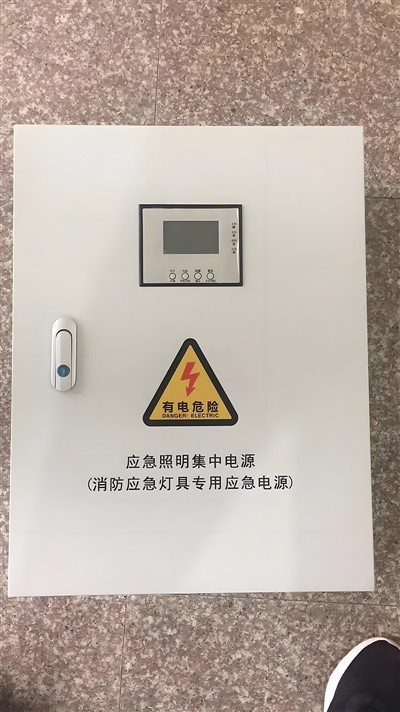
If you’re working in commercial electrical installations, industrial facilities, or even large residential complexes, you’ve probably walked past a secondary distribution box (SDB) without giving it much thought. But if you’re specifying equipment, managing site safety, or just trying to figure out why some SDBs hold up better in damp outdoor spaces than others, the answer is all in their IP ratings. As someone who’s spent 12 years as a secondary distribution box supplier, I’ve seen firsthand how picking the right IP rating isn’t just a technical checkbox—it’s the difference between a box that runs smoothly for 20 years and one that causes costly outages (or even safety hazards) after a single rainy season. Let’s break this down simply, no engineering jargon that makes your eyes cross. Secondary Distribution Box
First, let’s clarify what IP ratings actually stand for, because so many people mix this up. IP is short for “Ingress Protection,” a standard set by the International Electrotechnical Commission (IEC) that measures how well a piece of electrical equipment resists two main threats: solid objects getting inside, and liquids seeping in. The rating is two numbers, like IP44 or IP65, and each means something specific. The first digit (from 0 to 6) is solid protection, and the second (from 0 to 8) is liquid protection. If you’ve ever seen a rating like IP54, that’s the middle number—so that’s a common SDB, but it’s not one-size-fits-all.
Let’s start with solid protection, since that’s often the first line of defense. A 0 means no protection at all—those are old, indoor-only boxes you don’t see much of anymore. A 1 means they stop solid objects bigger than 50mm, so like a finger or a big tool. A 2 blocks things bigger than 12.5mm, which is smaller tools or loose screws. 3 is for objects over 2.5mm, like small wires or screwdriver tips. 4 is solids over 1mm, so tiny debris like dust or sand grains. Then, 5 means limited dust ingress—dust can get in, but not enough to mess with the internal parts, and 6 is totally dust-tight, so no dust gets in at all. For most SDBs, you’ll see first digits between 4 and 6, because those are the ones that keep small debris out during transport, storage, and on-site use.
Now the liquid side, which is where most SDB failures happen. A 0 here means no liquid protection—straight up, those are the ones you never want near water. 1 protects against vertical dripping water, so like a leaky pipe above the box inside a building. 2 is for when the box is tilted up to 15 degrees, so sloped roofs or small spills. 3 handles light rain or splashes at up to 60 degrees from vertical, so covered patios or semi-outdoor hallways. 4 is splashes from any direction, even heavy rain from the side—this is super common for SDBs mounted on exterior walls, as long as they’re not getting directly hit by heavy downpours. Then 5 is low-pressure water jets from any direction, so if your SDB is under a canopy that might get hit by sprinklers or hoses being used nearby. 6 is high-pressure water jets, perfect for outdoor industrial settings where you might wash down equipment, and 7 or 8 mean they’re submersible, which you almost never need for standard SDBs—those are for things like underwater pumps, not electrical distribution boxes that sit above ground.
Now, let’s tie this to secondary distribution boxes specifically, because they’re not just generic electrical enclosures. An SDB’s job is to take power from a main distribution board and split it out to smaller circuits: lighting, outlets, HVAC, machinery, whatever. That means if water or dust gets inside, it can short circuits, blow fuses, or even cause fires. I’ve had a customer call me 3 years ago because they installed a batch of IP31 SDBs on a construction site’s temporary power shed. A week later, a sudden thunderstorm dumped 2 inches of rain that ran down the wall right onto the boxes. The water seeped past the gaps meant for small solid protection, and half the circuits fried. They ended up paying thousands in downtime, and redoing all the boxes because they picked the wrong IP rating for the environment. That’s exactly the kind of mistake I help customers avoid now.
So let’s talk about which IP ratings are actually common for SDBs, based on where they’re installed. The most basic one, IP40, is only for fully indoor, dust-free areas. Think of a SDB tucked away in a building’s utility closet, not near any doors or windows that open often. IP41 is a step up, still indoor, but good for spaces that might have occasional light moisture, like a basement utility room with a humidifier, or a small shop’s back office. But if you’re mounting a SDB outside—even under a small overhang—IP44 is the minimum I recommend. I’ve supplied thousands of IP44 SDBs for apartment complexes, retail storefronts, and small warehouses, and they hold up perfectly in heavy rain, snow, or even occasional splashes from cleaning equipment. A lot of people ask me why not just go higher, like IP65, for outdoor use. It’s not that you can’t, but IP65 boxes are usually more expensive, heavier, and harder to modify on-site—unless you’re in a place with constant, direct high-pressure water exposure, like a dock or a food processing plant where they hose down walls every day. For most residential and commercial outdoor installs, IP44 is the sweet spot.
Wait, there’s a common myth I need to bust here: some people think a higher IP rating makes a box “better” across the board, but that’s not true. If you put an IP67 (submersible) box in a dry indoor closet, it’s overkill. The extra seals and layers add unnecessary cost, and the box is bigger, which might be a problem if your site has limited space for electrical enclosures. On the flip side, using an IP44 box in a location where it gets hit by constant high-pressure jets is just reckless. I once had a food factory manager come to me with 10 IP44 SDBs that had failed after 6 months because their cleaning crew used a pressure washer to spray down the side of the production line, and the jets seeped past the IP44’s seals. The fix? We swapped them for IP65 SDBs that are rated for that kind of high-pressure water, and they’ve worked flawlessly for 4 years now. That’s why as a supplier, I don’t just sell you a random box—I ask you questions about where it’s going, how it will be used, and what kind of environment it’s in. That’s the service no one else talks about enough.
Another thing to keep in mind: IP ratings are standardized, but they can be misrepresented. A lot of cheap imports will say “IP44” on the box, but they don’t actually pass the IEC’s test for splashes from all directions. I’ve seen that mistake firsthand when a contractor bought a batch of “IP44” SDBs from a online retailer for a hospital construction project. They installed them on the loading dock, and after the first rain, water seeped in through the seams. When we tested a sample, it only met IP32, not IP44. That’s why it’s so important to work with a supplier that tests their own products to the actual IEC standards, not just labels them with a number. All the SDBs I supply go through independent testing for ingress protection, so you can be sure the rating on the box is what it says.
Let’s also talk about how SDB IP ratings tie into safety and compliance. In most countries, electrical equipment has to meet local electrical codes, and those codes often reference IEC IP standards. For example, in the US, the NEC (National Electrical Code) requires outdoor electrical enclosures to have at least IP44, and in wet locations, they need a higher rating. If you install a box that doesn’t meet the required IP rating, you could be violating code, which means your insurance won’t cover a fault, or you could face fines during an inspection. I’ve had a few electricians come to me after getting a code violation notice because they used the wrong SDB IP rating, and we were able to swap out the boxes for compliant ones fast, so they didn’t miss their inspection deadline. That’s a big part of what I do for customers beyond just selling hardware.
Now, if you’re planning your next project, how do you pick the right IP rating for your secondary distribution box? Let’s make a simple checklist:
- Is the box fully indoors, with no exposure to moisture or dust? Go for IP40.
- Is it indoors, but in a humid space (basement, utility room, near a kitchen sink)? Go for IP41.
- Is it outdoors, under an overhang or awning, exposed to occasional rain or splashes? Go for IP44.
- Is it outdoors in a location with direct, constant water exposure (hoses, sprinklers, pressure washers)? Go for IP65.
- Is it for a harsh industrial setting with dust or extreme conditions? Go for IP66 or higher.
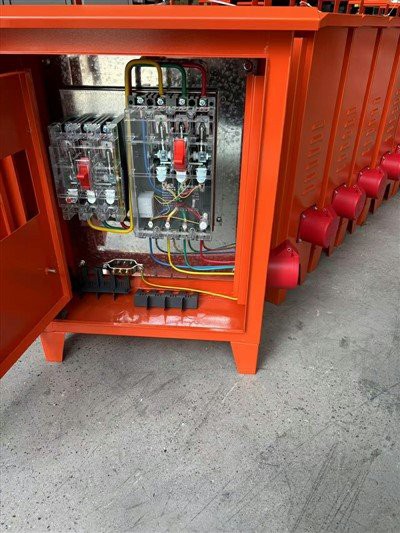
One last thing to remember: IP ratings only apply to the enclosure itself, not the internal components of the SDB. So even if the box is IP65, if you put inside non-waterproof circuit breakers, those will still fail if there’s a problem. That’s why I only supply SDBs with internal parts that are also rated for the same environment, so you don’t have to worry about mismatched ratings causing issues.
At the end of the day, the IP rating of your secondary distribution box isn’t just a technical detail—it’s the foundation of safe, reliable power distribution. I’ve spent years refining how I match the right SDB to each project, because I know how much is on the line. Whether you’re a contractor installing SDBs for an apartment complex, a facility manager upgrading your industrial power, or an electrician needing compliant boxes for a new build, I’m here to help you sort through the options and get the right solution for your needs. If you’re ready to discuss your project, need a sample, or just have questions about which IP rating is best for your specific location, feel free to reach out to me. We can walk through your site details, go over pricing, and make sure you get a SDB that will perform for years to come.
Distribution Chamber References
- International Electrotechnical Commission. (2019). IEC 60529: Degrees of protection provided by enclosures (IP Code)
- National Electrical Manufacturers Association. (2021). Ingress Protection Standards for Electrical Enclosures
- Occupational Safety and Health Administration. (2022). Electrical Safety Guidelines for Outdoor Enclosures
Anhui Nanxian Electric Co., Ltd.
With abundant experience, we are one of the most professional secondary distribution box manufacturers and suppliers in China. We warmly welcome you to buy advanced secondary distribution box for sale here and get quotation from our factory. All customized products are with high quality and low price.
Address: Factory Unit 03-2, Building 21, Feidong Yinfeng Industrial Park Co., Ltd., Northeast Corner of Manquan Road and Changle Road, Hefei Circular Economy Demonstration Park, Feidong County, Hefei City, Anhui Province.
E-mail: 541580567@qq.com
WebSite: https://www.nxelepower.com/
