If you’ve ever stood in a coffee shop, fumbling with a takeaway cup lid that leaks a little hot latte into your palm, or tossing a lid that won’t break down in a recycling bin, you’ve probably wondered why not all paper cup lids are the same. As a paper cups supplier I talk to this question every day—from café owners picking their first lid to regular customers who want to reduce their waste. The truth is, every lid material comes with trade-offs: none is perfect, but matching the right material to your use case can cut down on leaks, save money, and shrink your environmental footprint. Let’s break down the three most common lid materials on the market, what makes each unique, and when to pick one over the other. Paper Cups
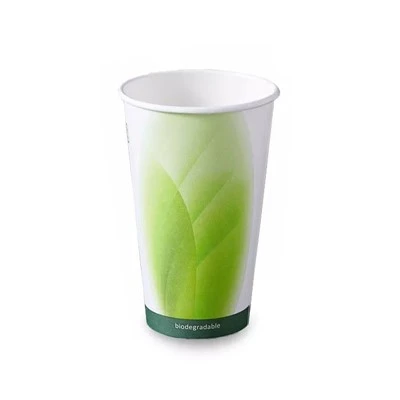
Polyethylene (PE) Coated Plastic Lids – The Workhorse Most Cafés Use
Polyethylene is the most widely used material for paper cup lids, and it’s easy to see why. PE is a lightweight, flexible plastic coating that bonds directly to paper or molded pulp, creating a waterproof seal that keeps hot drinks from seeping through. For busy café chains, this is a no-brainer: PE lids are cheap to produce, durable enough to hold up in transit, and compatible with standard cup stacking systems—so baristas can grab and stack them in seconds without wasting time.
But there’s a catch with PE lids: most are not recyclable through standard curbside programs. The thin PE coating sticks to the paper base, making it hard to separate plastic from pulp during recycling. I’ve had customers tell me they switched to PE lids specifically because they’re cheaper, only to face pushback from regulars who refuse to use them because of the plastic content. For hot drinks, though, PE does one thing exceptionally well: it resists heat. Unlike some other lid materials, PE doesn’t warp or release weird chemical flavors when holding coffee, tea, or hot chocolate—so your drink tastes the way it should, not like a plastic container. That makes PE lids the go-to for high-volume, on-the-go hot drink service, where speed and affordability beat out eco-friendly perks.
Polypropylene (PP) Lids – The Heat-Resistant Workhorse for Hot Drinks
If you’ve ever had a paper cup lid melt when you poured a boiling hot coffee, you’ve experienced the difference between PE and polypropylene. PP lids are a stiffer, more rigid plastic, made to withstand higher temperatures than PE. For drinks served at near-boiling temps—like the specialty lattes or pour-overs many craft cafés focus on—PP is a game-changer. It doesn’t warp, leak, or soften even when the cup is left in a car cup holder in direct sun for hours. That durability makes PP lids a favorite for café owners who serve larger hot drinks, or who operate in warmer climates where heat is a constant factor.
The downside of PP? It’s even less recyclable than PE for most consumers. Curbside recycling programs often don’t accept PP lids because they’re too small to be sorted by machines, and the plastic itself is harder to break down. What’s more, PP lids are slightly more expensive than PE—usually 10 to 15 percent higher per unit, a cost that adds up for small cafés with tight margins. I’ve had local coffee shops come to me for PP lids because their customers complained about leaking PE lids, only to adjust their pricing to cover the extra cost. If your business prioritizes customer experience and hot drink durability, PP is worth the investment—but if you’re focused on cutting overhead, it’s not always the best fit.
Molded Pulp Lids – The Eco-Friendly Alternative That’s Still Finding Its Footing
For every café owner who wants to reduce their waste, molded pulp lids are the big new option on the market. Made from compressed plant fibers—usually sugarcane bagasse, wheat straw, or recycled paper—molded pulp lids are 100% compostable in home or industrial facilities, and many are recyclable alongside paper products. They feel more natural to the touch, too: instead of the smooth, slippery plastic of PE or PP, molded pulp has a textured, paper-like finish that some customers prefer.
But molded pulp lids aren’t perfect, and that’s why they’re still not the most common lid. First, they’re less heat-resistant than plastic. If you pour a super hot drink into a molded pulp lid, it can soften or even break down after 10 or 15 minutes—something that’s a problem for long commutes or cold days when customers hold their cups for hours. They’re also stiffer, which makes them less flexible: stacking molded pulp lids can be trickier, and some baristas complain they don’t fit as snugly on paper cup rims as plastic lids, leading to more leaks. The cost is another hurdle: molded pulp lids can be 20 to 30 percent more expensive than PE, a big ask for small businesses that already operate on thin margins.
I also see a common misconception about molded pulp lids: many people assume they’re fully recyclable, but that’s not always the case. Some curbside programs still reject them because the plant fibers can contaminate paper recycling batches, so it’s important to check your local rules before switching. That said, molded pulp is the fastest-growing lid material right now, as more customers prioritize eco-friendly options—and with advances in manufacturing, the heat resistance is improving every year.
What This Means For Your Business
As a paper cups supplier, I can’t tell you which lid material is “the best”—it all comes down to your specific needs. If you’re a high-volume chain café that prioritizes speed, affordability, and heat resistance for hot drinks, PP might be your top pick. If you’re a small local shop that wants to cut waste and doesn’t serve super hot drinks, molded pulp is a great way to align with customer values. If you’re just starting out and want a reliable, low-cost option that works for most drinks, PE is a safe bet.
The key is to test a small batch first. I’ve had customers switch to a new lid only to find it doesn’t fit their cups, or that the heat is too much for their drinks—so ordering a trial run before committing to a bulk order saves a lot of hassle. For example, a café in my area tried molded pulp lids and thought they’d love the eco-friendly angle, only to find their morning regulars hated that the lids felt “flimsy” for their 12-oz lattes; after switching back to PE, they added a line of 16-oz hot drinks with PP lids to cater to commuters who needed more durability.
Final Thought
At the end of the day, the best lid is one that works for both your business and your customers. Lids aren’t just afterthoughts—they’re what keep drinks from spilling, what customers remember when they think of your shop, and a small (but important) part of reducing waste. If you’re looking to upgrade your paper cup lids, or just want to compare options that fit your budget and needs, I’m here to help you find the right fit.

To discuss your specific requirements and find the perfect lid solution for your business, feel free to reach out to our team for a personalized consultation.
Cake Box References
- "Single-Use Cup Lids: Material Properties and Environmental Impact," Packaging Technology and Science, 2021.
- "Recyclability of Disposable Food Service Ware," National Waste & Recycling Association, 2022.
- "Consumer Preferences for Takeaway Drink Packaging: A Global Survey," Sustainable Packaging Coalition, 2023.
- "Molded Pulp Lid Manufacturing: Heat Resistance and Durability Advances," Journal of Renewable Materials, 2022.
- "Cost-Benefit Analysis of Disposable Cup Lid Materials for Small Coffee Shops," Small Business Administration Industry Report, 2021.
Wuhan Green Treasure Industry & Trade Co., Ltd.
As one of the most professional paper cups suppliers in China, we also support customized service and OEM service. We warmly welcome you to buy durable paper cups made in China here from our factory. If you have any enquiry about free sample, please feel free to email us.
Address: T4-1106Dream Zone, No. 9 Hongtu 1st Road, Dongxihu District , Wuhan, China.
E-mail: info@greentreasured.com
WebSite: https://www.greentreasured.com/
