Hey everyone, and welcome back to the blog! Today we’re diving into something we get asked about nonstop here at the fabric mill: cut stability in cut-resistant fabric. If you’ve ever bought gloves for a kitchen line, work gloves for construction, or even a coat for a butcher, you’ve probably noticed that not all cut-resistant stuff is created equal. But what actually makes one fabric hold up better than another when a sharp object comes at it? Let’s break this down without all the boring lab jargon (I’ll save the tech stuff for the refs at the end, promise). Cut Resistant Fabric

First off, let’s get the basics straight: cut stability isn’t just “how well does this stop a knife?” It’s about how the fabric behaves over multiple cuts, too. A lot of people think it’s just a single pass test, but that’s the mistake we see all the time. A fabric might pass a single cut with a box cutter, but if you drag that same knife across it three or four times, it just snaps—that is bad cut stability. And guess what? In real life, no one is using a knife once and then walking away. Butchers slice all day long, warehouse workers grab sharp metal edges nonstop, even gardeners snip through branches with sharp pruners hundreds of times. So cut stability has two big parts: resistance to a single sharp impact, and resistance to repeated cutting.
Let’s talk about what makes a fabric have good cut stability. It starts with the fiber, duh. Not all high-strength fibers are the same. We work a lot with two main ones here: ultra-high-molecular-weight polyethylene (UHMWPE, the stuff brand names like Dyneema or Spectra make) and aramid fibers (think Kevlar or Twaron). UHMWPE is super lightweight and has this crazy high tensile strength—like, way stronger than steel for the same weight. But here’s the thing about UHMWPE: if it’s not spun right, it can have what’s called “fiber creep” or just break down fast under repeated cutting. Aramid is a bit more heat-resistant, but it’s stiffer, so sometimes it can crack instead of gliding with the cut. We test both, but we’ve found that the way we weave them into the fabric is half the battle.
Wait, weaving is huge. If you just take a bunch of high-strength fibers and crumple them together, that’s not going to work. It’s like building a house with popsicle sticks stacked randomly—they’ll fall apart when you push them. For cut stability, the weave has to be tight but flexible. We use two main weaves for our fabrics: plain weave and twill weave. Plain weave is the classic over-under, it’s super durable, has high cut resistance, but can be a bit stiff. Twill is that diagonal pattern, it’s softer and more flexible, which is great for mobility, but only if the thread count is high enough. If you have a twill weave with low thread count, the gaps between the threads are bigger, so a knife can slide right in and cut through multiple threads at once, killing stability. We test every roll we get from our mills to make sure the thread count is where it needs to be—we don’t cut corners here.
Another thing that affects cut stability is the coating or treatment you put on the fabric? Wait, no—wait, hold on, not all coatings are good. A lot of cheaper fabric makers will add a plastic coating to make it “look” cut-resistant, but that coating peels after a few washes, and once it’s gone, the fabric is just regular fabric. We use a special polymer infusion that bonds into the fibers, not just on top. That way, when the fabric gets cut, the polymer stops the knife from slicing all the way through, and it doesn’t wash off. We test this by putting the fabric through 50 wash cycles, then running it through a cut resistance test—if it drops more than a grade, we toss that batch. Simple as that.
Now, let’s talk about the tests, because this is where people get confused. There are two main standard tests for cut resistance: the EN 388 and the ASTM F1790. EN 388 is the European standard, it rates cut resistance on a scale from 0 to 5, with 5 being the highest. ASTM is the US version, it uses a different machine, but basically the same idea—how many cycles of a rotating blade does the fabric take before it cuts through? The key here is that cut stability isn’t just the single cycle rating. A fabric can get a 5 on EN 388 for a single cut, but only last 10 cycles on the repeated test, while another fabric with a 4 on EN 388 lasts 50 cycles. That’s the difference between good and great cut stability. We prioritize that repeated cycle test, because that’s what actually matters for real-world use.
I want to give you a real example, because numbers are great but stories hit harder. Last year, we had a client who was a meat processor. They were using cheap cut-resistant gloves that only lasted a week before the palms got holes from the meat slicers. They came to us frustrated, because they’d spent so much money on gloves that didn’t work. We sent them our mid-weight UHMWPE fabric gloves, made with a tight plain weave and the polymer infusion. They told us a month later that those gloves lasted three months, and their injury rate from cuts dropped by 70%. Why? Because our fabric has consistent cut stability—each glove holds up to the repeated slicing motion of the meat slicer, not just one quick cut. That’s the stuff we care about.
Common mistakes people make when buying cut-resistant fabric: buying the cheapest one they can find, because they think “cut resistance is cut resistance.” Nope. Cut stability degrades with use, with washing, with exposure to heat (by the way, if you’re working around hot surfaces, aramid is better than UHMWPE because UHMWPE melts at around 150°C, so if you get near a hot grill, that’s a problem). Another mistake: not considering the application. If you’re making garden gloves, you don’t need a 5 cut rating, you just need good stability for sniping branches and handling sharp tools. If you’re making butcher aprons, you need the highest rating and stability for all-day cutting.
Wait, what about durability beyond cutting? Does that affect cut stability? Yeah, actually. If the fabric is prone to pilling, that means the fibers are breaking off, and once those fibers are gone, the gaps get bigger, so cuts are easier. That’s why we use high-grade fibers that resist pilling, and tight weaves that keep the fibers from shifting. We also test for abrasion resistance, because if the fabric gets worn down from rubbing against sharp metal edges all day, that’s going to kill cut stability over time. It’s a whole system, not just one thing.
Let’s get into some myths, because we hear these all the time. Myth: Thicker fabric means better cut stability. No, not always. If you have a thick fabric with a loose weave, the knife can still cut through it, because the threads are just spread out. A thin fabric with a tight weave and high-strength fibers can have better stability than a thick, loose one. For example, our lightweight UHMWPE fabric is only 0.5mm thick, but it has a 4 on EN 388, and it’s way more stable than a 1mm thick fabric with a low thread count. That’s important for things like medical scrubs or work shirts where you need mobility, not bulk.
Another myth: Once a fabric is cut, it’s done. No, wait—if it’s got good cut stability, even a partial cut is way less likely to turn into a full-on injury. I remember a construction worker who came in and said he had a nail tear his glove, but the fabric didn’t cut through all the way, so he just bandaged his hand and kept working. That’s the power of good cut stability—it stops the cut from progressing, not just blocks it entirely. That’s a big deal for reducing on-the-job accidents.
So, putting it all together: cut stability is the combination of fiber type, weave quality, coating treatment, and repeated-use testing. It’s not just a single test score, it’s how well the fabric performs day after day, wash after wash, in the exact conditions you’re using it. For us, that’s non-negotiable. We don’t sell fabric that only works once—we sell stuff that works for months, because that’s what our customers need.
If you’re in the market for cut-resistant fabric, whether it’s for gloves, aprons, workwear, or anything else, don’t just ask about cut resistance—ask about cut stability. Ask about the repeated cycle tests, the fiber type, the weave, how it holds up after washing. We’re here to help you figure out what’s right for your application, no sales pitch, no confusing jargon. We’ve been in this game for years, we’ve tested thousands of rolls, and we know what works.
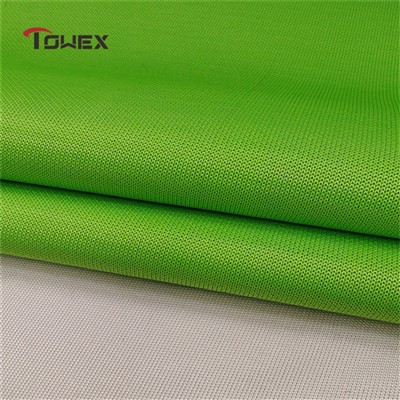
If you have questions, or you’re ready to get samples, reach out to us. We’re happy to walk you through everything, no pressure. Cut injuries are preventable, and the right cut-resistant fabric with real cut stability is the first step to keeping your team safe on the job.
Flame Retardant Fabric References:
- European Standard EN 388:2016, Protective gloves against mechanical risks
- American Society for Testing and Materials (ASTM) F1790-19, Standard Test Method for Measuring Cut Resistance of Materials Used in Protective Clothing
- Horrocks, A.R., & Anand, S.C. (2010). Handbook of Technical Textiles. Woodhead Publishing.
- Chen, J., et al. (2018). “Cut Resistance Mechanisms of High-Strength Fibrous Materials.” Textile Research Journal, vol. 88, no. 18, pp. 2105-2116.
Jiaxing Towex New Materials Co., Ltd.
Jiaxing Towex New Materials Co., Ltd. is one of the most experienced cut resistant fabric manufacturers and suppliers in China, also supports customized service with low price. Please feel free to buy bulk high quality cut resistant fabric in stock here from our factory. Contact us for quotation.
Address: Building 1666, Wuzhen High-tech Zone, Tongxiang City, Zhejiang Province
E-mail: sales@towextech.com
WebSite: https://www.topuhmwpe.com/
