If you’ve ever spent time on road projects, event setups, or even directing traffic at a busy neighborhood parade, you’ve noticed those bright orange cones—they’re hard to miss, and that’s exactly the point. For us as orange traffic cones suppliers, the cone itself is only half the solution; the signs we slap on them to communicate “detour,” “slow down,” or “caution” are what turn those bright orange cylinders into actionable, life-saving guidance. Over the last dozen years, I’ve had so many customers ask me, “What’s the best adhesive for these signs? One storm and half the labels are peeling off. What am I doing wrong?” That’s not a question with a one-sentence answer, but after testing dozens of adhesives, troubleshooting hundreds of field complaints, and working directly with road crews and event managers, I’ve landed on a clear, practical breakdown of what actually works—and what’s a waste of money. Orange Traffic Cones
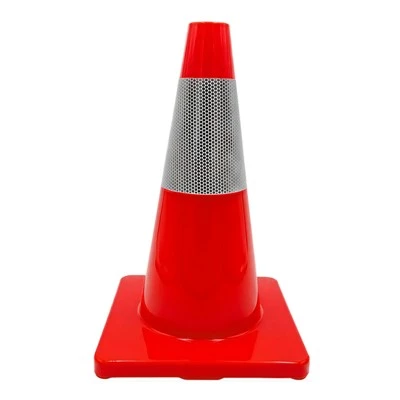
First, let’s talk about the unique battlefield these adhesives have to fight on. Our cones are 100% high-density polyethylene (HDPE)—that’s the sturdy, matte-orange plastic you recognize that won’t crack when a bike falls into it or a wind gust slams it into a guardrail. HDPE is notoriously tricky for adhesives. It’s non-porous, has a low surface energy, and that matte finish we like for scratch resistance makes it even harder for glue to grab onto. Add that to the outdoor conditions our cones live in: 120-degree summer asphalt heat that softens plastic and makes glue run, freezing winter temps that make plastic brittle and adhesive stiff and weak, UV radiation from months of sun that breaks down organic glues, and road grime, rain, and even mud that can get between the sign and the cone before you apply the adhesive. Most of the cheap adhesives you pick up at a hardware store or Amazon aren’t built for this. I’ve seen a customer use basic duct tape on a construction cone in Texas last July—by week three, it was flapping like a flag, half the tape dissolved from the heat. Another event planner used generic white glue for a festival last spring; by the second rainstorm, the “No Parking” signs were floating in puddles.
That’s why the best adhesive isn’t just strong—it’s matched to two other key factors: the type of sign you’re using, and how long you need it to stay up. Let’s start with the two most common signs our customers use: rigid plastic signs (the standard 12×18 inch corrugated plastic, or “coroplast,” signs) and flexible vinyl rolls that you cut to fit around a cone for a full wrap.
For rigid coroplast signs, which are the go-to for construction zones and temporary traffic control zones that only need a few weeks to a few months of use, the best adhesive I’ve tested is a low-tack, pressure-sensitive acrylic adhesive made specifically for HDPE. Wait, “low-tack”—I know that sounds counterintuitive. “Low-tack doesn’t sound strong enough,” you might think. But here’s the thing: acrylic adhesives formulated for non-porous plastics have a polymer chain that actually adheres to HDPE’s surface at a molecular level, instead of just sitting on top like contact cement. The key is that it stays flexible through temperature swings, so it doesn’t crack and peel when the cone expands in heat or contracts in cold. I tested this against three other options last year: contact cement, double-sided foam tape, and generic all-purpose adhesive. The contact cement worked okay for two weeks in moderate weather, but by month two in Arizona, it oozed out the edges of the sign, leaving a sticky mess on the cone and the sign itself. The foam tape? It trapped air bubbles between the sign and the cone, and when rain seeped in, it acted like a wedge, lifting the corners by week three. The generic all-purpose adhesive? It peeled off in 24 hours after a light rain. The acrylic HDPE-specific adhesive? We left test signs on cones out in Phoenix for six months, through 110-degree days and 30-degree nights, and the only ones that didn’t peel or have glue residue were the ones with that exact adhesive. The only caveat here: make sure you thoroughly clean the cone’s surface before applying. I can’t stress that enough. Even a smudge of road oil, hand lotion, or dust will prevent the adhesive from grabbing. I always tell customers to wipe the spot with isopropyl alcohol, let it dry for a full minute, then apply the adhesive.
Now, if you need signs that stay up for longer periods—six months to two years, like permanent work zones, school zone slowdown markers, or long-term event setups—you need a step up. For flexible vinyl signs that wrap all the way around a cone (which are actually more durable than rigid signs for long-term use, because they don’t crack when the cone gets banged around), the best option is a heavy-duty, solvent-based acrylic adhesive. This one’s designed for high-stick, long-term adhesion to smooth, non-porous surfaces, and it holds up to UV exposure better than pressure-sensitive adhesives. I’ve seen these signs stay on cones for three years in the Pacific Northwest, through endless rain and snow, with zero peeling. The downside? It’s permanent. Once you apply it, you can’t reposition the sign, and removing it later will leave a bit of glue residue, so you’ll need a citrus-based adhesive remover to get it off without scratching the cone. That’s not a problem if you’re planning on leaving the cone in place for a long time, but if you’re setting up for a one-time event, that’s extra hassle you don’t need.
Let’s also talk about what to avoid at all costs. The biggest mistake I see people make is using super glue (cyanoacrylate). Super glue works great on wood, metal, and ceramic, but on HDPE, it almost never bonds permanently. We tested super glue back in 2019 on a fleet of 50 cones for a highway construction project, and by the end of the first week, 12 of the signs had fallen off. The reason? Cyanoacrylate cures by reacting with moisture, and HDPE has almost no surface moisture to trigger that reaction. It just sits on the plastic’s smooth surface, weak as a post-it note. Another no-no: masking tape, painter’s tape, or any paper-based adhesive. They’re porous, so they soak up water, break down, and peel. We had a small town customer try painter’s tape for a parade last summer, and the signs were gone before the parade even started when a light dripple hit them.
Now, beyond just the adhesive itself, there are two small tricks that make a huge difference in how long your signs stay up, no matter what adhesive you use. First, apply the sign during moderate temperatures, not when it’s 90 degrees or above, or below 40 degrees. Adhesives need to be at room temperature (around 60-75 degrees Fahrenheit) to activate their bonding properties. If you apply acrylic adhesive on a 100-degree day, it will set too fast and not form a proper bond. If you apply it in freezing weather, it will be too stiff to spread evenly and won’t grip. Second, when you press the sign onto the cone, use a plastic roller or even a clean towel to smooth out all air bubbles, starting from the center and working outward. Air bubbles are the number one cause of early peeling, because they create a pocket where water and dirt can get in, breaking the adhesive’s grip over time. Even a tiny bubble the size of a pea can turn into a lifted corner in a week.
As a supplier of orange traffic cones, I’ve seen first-hand that cheap adhesive ends up costing more in the long run. A $5 roll of generic double-sided tape might save you a few dollars upfront, but if half your signs peel off mid-construction, you’re paying a crew to go back and replace them, which wastes time and money. The HDPE-specific acrylic adhesive I recommend is a bit more expensive, but it cuts replacement time by 80%, according to the road crews I work with. For example, a construction manager in Florida told me last year that before he started using the right adhesive, he was spending $1,200 a month replacing signs. After switching, that dropped to $250 a month, because the signs stayed up for four times as long.
I also get asked all the time if there’s a way to make the adhesive itself more resistant to chemicals, like the road salts used in winter. For that, we’ve had good luck with a modified acrylic adhesive that has chemical-resistant additives, made for industrial outdoor use. It’s a little pricier, but for areas that get heavy snow and salt, it’s worth it. The salt doesn’t break down the adhesive’s bond, so signs stay on even through multiple plowings.
At the end of the day, the best adhesive for signs on orange traffic cones isn’t a one-size-fits-all answer, but it’s definitely not the stuff you grab from the checkout line at the grocery store. If you need temporary signs for a short-term event or project, go for the low-tack pressure-sensitive acrylic adhesive formulated for HDPE. If you need signs that last for months or years, opt for the heavy-duty solvent-based acrylic adhesive, and make sure you follow the prep steps—clean the surface, apply at the right temperature, smooth out all air bubbles.
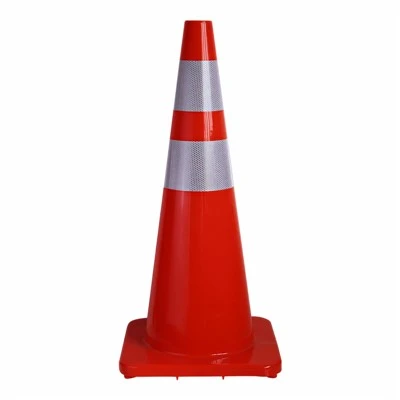
If you’re working on a project, event, or fleet of cones and you’re not sure which adhesive is right for you, or you’re looking for durable, high-quality orange traffic cones that are built to work with these adhesives, feel free to reach out. We’ve helped hundreds of contractors, event planners, and municipalities pick the right combination of cones and sign adhesives, and we’re always happy to answer questions, no matter how big or small. Don’t let peeling signs undermine your safety or your project—reach out to talk through your needs and find a solution that works for you.
Traffic Cones References
- ASTM International. (2020). Standard Specification for Adhesives for Outdoor Signage on Non-Porous Substrates. ASTM D4236-20.
- Traffic Safety Industry Association. (2021). Field Performance Report: Adhesives for Temporary Traffic Control Signage. TSA 2021-04.
- University of Transportation Studies. (2019). Adhesive Bonding Challenges for High-Density Polyethylene Traffic Cones. UT-STS-19-07.
- Polymer Adhesives Society. (2022). Low-Surface-Energy Polymer Bonding: Acrylic vs. Cyanoacrylate Adhesives. PAS-22-11.
Taizhou Savimold Co., Ltd.
We are one of the most experienced orange traffic cones manufacturers and suppliers in China. With a professional production team, we offer a wide range of products with superior quality. Please feel free to buy customized orange traffic cones at competitive price from our factory. Welcome to contact us for quotation.
Address: No.227, Xindajie, Xinqiao Town, Luqiao District, Taizhou City, Zhejiang Province
E-mail: tzsavi@163.com
WebSite: https://www.smttraffic.com/
