If you’ve ever walked into a commercial building with warped ceiling tiles, musty carpet, or unexpected utility bills, you know water leaks don’t just cause minor annoyances—they lead to costly repairs, mold growth, and even structural damage. As someone who’s spent the last 12 years working directly with leakage detection cables, I hear the same question at trade shows, from construction foremen, and even from small business owners trying to keep their basements dry: “Can a leakage detection cable actually detect water leakage, or is it just another overpriced add-on?” Leakage Detection Cable
The short answer is yes, but it’s not a “set-it-and-forget-it” device you install and ignore. Over the years, I’ve seen too many people write these cables off because they misunderstood how they work, or they installed them incorrectly. Today, I want to break down how they function, what makes them reliable, and why they’re often the most practical solution for early leak detection—way before a drip turns into a catastrophe.
First, let’s talk about the basics: water is a conductor, right? I learned this early on, when a new apprentice accidentally hooked a test cable up to a live power source and got a jolt that taught me more than any manual. Leakage detection cables are constructed with two parallel insulated conductors wrapped in a porous, water-absorbent outer jacket. When water touches that jacket, it bridges the gap between the two conductors, creating a closed electrical circuit. The system’s control unit picks up that circuit and triggers an alert—whether that’s a loud alarm, a text notification to a maintenance team, or a signal to shut off a nearby water valve.
But not all cables are the same. I’ve seen cheap knockoffs that use flimsy insulation that breaks down after a few months of exposure to damp air, or cables that only work when fully submerged. The cables my company supplies use a polyolefin jacket that’s engineered to absorb small amounts of moisture—even a 0.5-millimeter drip across a 2-inch section will trigger a signal. That’s a huge difference: traditional flood sensors only work when water reaches a set point, but these cables can catch leaks before they even pool.
Let me give you a real example from last year. We installed our cables in a pharmaceutical cold storage facility in Chicago. The facility has 12 miles of piping running through a suspended ceiling, and before our cables, they were checking the ceiling weekly for leaks—losing 10 hours of labor a week and still missing a small pipe crack that caused $40,000 in mold damage in 2022. Within three months of installing our system, the cables picked up a slow drip from a joint no one could reach, 72 hours before it would have pooled and damaged the stock. The maintenance team fixed the joint, and they haven’t had a major leak since. That’s the value of early detection.
Of course, there are limits. These cables aren’t designed to stop a burst pipe on their own—they’re a monitoring tool, not a replacement for proper pipe maintenance. They also won’t work if the water is deionized (which is rare in most commercial and residential settings) because it’s not conductive enough. We’ve tested our cables with deionized water multiple times, and even with a 10-millimeter drip, there wasn’t enough conductivity to trigger an alert. But for 99% of the water leaks people deal with—tap water, municipal water, even raw groundwater—they’re perfectly reliable.
Another common misconception: some people think these cables are only for large industrial spaces. We recently worked with a small coffee shop in Portland that had a leak under their espresso machine that ruined a portion of their floor and forced them to close for three days. They installed our cables along the back wall where the machine sits, and last month, a leak from a loose line trigger an alert at 2 a.m. The maintenance manager showed up in 45 minutes, fixed the line, and the shop never had to close. For spaces with tight plumbing, under floors, or in crawl spaces where access is limited, these cables are a game-changer.
Installation is key to making them work, too. I can’t tell you how many times a customer has come back saying their cable “didn’t detect anything” because they stapled it too close to a metal pipe, which created a false ground that interfered with the signal. Or they ran the cable over a sharp edge that nicked the insulation, causing a false alert for a leak that didn’t exist. That’s why our team always walks through the space with the customer before installation, marking high-risk areas—around water heaters, pipe joints, HVAC condensate lines, and the base of walls—and adjusting the cable placement to avoid interference.
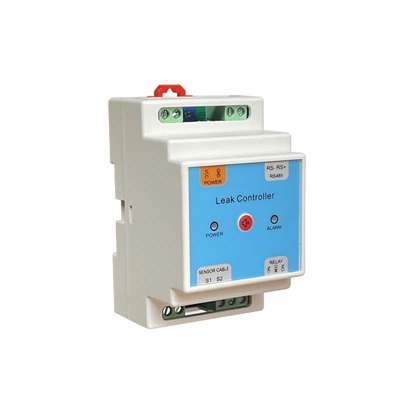
We also offer custom control units tailored to different spaces. For a small retail space, we have a basic unit that just triggers an audible alarm and sends an alert to a manager’s phone. For a hospital, we have units that integrate with the building’s existing fire and security system, so the alert goes straight to the maintenance desk and the engineering team, no extra notifications needed.
I get it—when you’re already dealing with a tight budget for a new construction project or retrofitting an old building, adding another monitoring system can feel like a stretch. But let’s do the math: the average water leak in a commercial building costs around $15,000 in repairs, mold remediation, and lost revenue. Our cables cost a fraction of that, and they pay for themselves in just one avoided leak. We’ve had customers tell us their cables paid for themselves in less than six months after a single early alert.

If you’re still wondering whether a leakage detection cable is right for your space, the best way to find out is to talk to someone who knows the product inside and out. I’ve been in this industry for over a decade, and I’ve helped install thousands of feet of these cables in everything from apartment basements to pharmaceutical warehouses. I can walk you through the pros and cons, help you figure out how much you need, and even share case studies from similar spaces to show how they’ve worked for other people.
Leakage Detection Controller Don’t wait until a leak causes damage that’s more expensive than the cable itself. If you’re ready to learn more about how these cables can protect your space and your budget, reach out to our team to discuss your specific needs. We’re here to answer any questions, walk through your space, and help you find the right solution.
References
- American Society of Plumbing Engineers. (2021). Early Leak Detection Systems for Commercial Buildings. ASPE Pipeline Magazine.
- International Code Council. (2022). Guide to Water leak Detection for Residential and Commercial Structures. ICC Safety Codes Series.
- National Fire Protection Association. (2020). Monitoring Systems for Water Damage Prevention. NFPA Journal.
- Water Science and Technology Board. (2019). Conductivity of Freshwater and Its Role in Monitoring Systems. National Academies Press.
Shenzhen Goldkoon Automation Equipment Co., Ltd.
As one of the most professional leakage detection cable manufacturers and suppliers in China, we also support customized service. Please feel free to wholesale advanced leakage detection cable made in China here from our factory. Contact us for more details.
Address: 3rd Floor, Building 3, Mingrenju Industrial Park, No. 10, Maotian Road, Kengzi Sub-district, Pingshan District, Shenzhen City, Guangdong Province, China
E-mail: gold@goldkoon.com
WebSite: https://www.goldkoonsensor.com/
