Hey everyone, it’s [Your Name] here, and if you’ve ever worked with plumbing, irrigation, or underground construction projects, you’ve definitely heard of PE pipes. They’re everywhere for a reason—lightweight, flexible, corrosion-resistant, way easier to install than metal pipes. But there’s one question I get asked constantly, especially from folks working on outdoor projects or jobs where pipes might be exposed to sun for even a little while: Are PE pipes UV resistant? Let’s cut through the confusion, since I’m right in the thick of supplying these pipes, and this is stuff I field every single day. PE Pipes
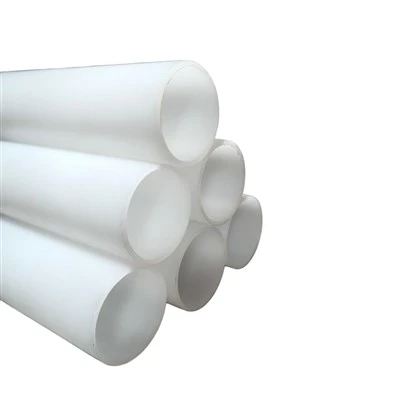
First off, let’s get one thing straight: Not all PE pipes are created equal when it comes to UV resistance. That’s the biggest myth out there—people see “PE” and assume it’s the same across the board, but no. The key here is the type of polyethylene, and more importantly, whether additives were thrown in during manufacturing to fight UV rays. Natural, unmodified polyethylene (that’s the plain, raw stuff before processing) actually breaks down pretty quickly when exposed to ultraviolet light from the sun. I’m talking like, a few weeks to a couple months tops if it’s just raw PE sitting outside in direct sun. It’ll start to get brittle, turn that chalky white color, and if you touch it, it’ll crack super easily—way before it ever gets a chance to hold water or do its job. So if someone tells you all PE pipes are UV resistant, they’re not telling the full story. That’s where our job as suppliers comes in, right? We don’t just sell pipe—we sell pipe that’s built for the job you’re using it for.
Now, let’s break down why UV breaks down plain PE. UV light is basically high-energy radiation that messes with the molecular bonds in plastic. For polyethylene, those bonds get hit, break apart, and the plastic loses its flexibility and strength. Think about a plastic water bottle you left in your car all summer—after a few weeks, it’s wrinkly, flimsy, doesn’t hold shape right. That’s the same process, just sped up a bit for raw PE. Now, the good stuff is modified PE pipes, specifically the ones that use UV-stabilized additives. What are those additives? Usually things like carbon black, or Hindered Amine Light Stabilizers (HALS), sometimes even a mix of both. Carbon black is a big one here—it’s not just for making the pipe black (though most UV-resistant PE pipes are black, which is another clue). Carbon black absorbs UV light instead of letting it penetrate the plastic, so it protects the molecular structure underneath. HALS works a little different—it acts like a repairman, basically fixing those broken molecular bonds before they can cause damage. That’s why when we supply outdoor-grade PE pipes, every single one has those additives mixed in during extrusion. I make sure our team double-checks that, because if a customer buys a pipe that’s supposed to be for above-ground use but doesn’t have the additives, we’ve wasted their time and money—and that’s not how we do business.
Wait, let’s talk about real-world examples here, because that’s what matters. I had a customer last year who ordered standard PE pipe for a above-ground irrigation line for a golf course in Arizona. He forgot to mention it’d be sitting in direct sun 12 hours a day, no cover. A month later, he was blowing up my phone saying the pipe was cracking all over, had to dig it all up and replace it. We ended up supplying him with UV-stabilized pipe for free—no questions asked—because that’s on us to make sure we ask the right questions upfront. Since then, that same customer has ordered three more batches, and they’ve been running perfectly for over two years now, no issues. The difference? That second batch had the right additives. That’s a story that sticks with me, because it shows how easy it is to mix up the two types.
Now, let’s get into the technical side a little, but I’ll keep it simple. The standard here for PE pipe UV resistance is, from what I’ve seen in industry tests, that stabilized PE pipes can withstand direct outdoor sun for 50+ years if they’re not exposed to extreme temperatures or physical damage. Wait, 50 years? Yeah, that’s not a random number. It’s based on accelerated aging tests—lab tests where they blast the pipe with UV light 24/7, simulate weather changes, high and low temps, to mimic decades of real-world exposure. We always share those test results with customers when they need them, no holding back. For underground use? Even if the pipe’s black, UV doesn’t matter there because there’s no sun. But if you’re going to have it above ground, even just for a little while during installation, you need that stabilized stuff. Even partial exposure—like if you’re installing a line and it’s sitting outside for a week before you cover it—you don’t want to risk it. I always tell customers, “It’s better to pay a little extra for UV-stabilized than to have to do the job twice.”
Another thing I get asked a lot: Can I add UV additive to my plain PE pipe myself? Short answer—don’t do it. Mixing additives into plastic is super precise. If you don’t do it during manufacturing, the additive won’t bond right with the PE, and it’ll just wash off or wear away over time. You’ll end up with the same problem as plain pipe, just a little later maybe. I’ve seen people try it, and it always backfires. It’s way cheaper in the long run to buy the pre-stabilized pipe than to mess around with DIY fixes.
Let’s also talk about common applications where UV resistance is non-negotiable. Above-ground irrigation lines for farms, golf courses, landscaping—definitely. Outdoor water distribution lines, like for a backyard pool or a public park fountain. Even temporary pipe runs for construction sites, where the line might be out in the sun for months while the building goes up. The opposite is underground pipe—water mains that are buried, sewer lines, gas lines—UV doesn’t matter there, because they’re not exposed to sun, so that’s when you can go with the standard PE pipe, which is a little cheaper. That’s another thing I help customers with—matching the right pipe to their use case, so they don’t overpay when they don’t need to, or cut corners when they do need the UV stuff.
Wait, let’s address a couple myths I hear all the time. First: “Clear PE pipe is more UV resistant because you can see what’s inside.” No, way—clear PE is almost always plain, no additives, because the additives like carbon black make it black. Clear pipe is for things like compressed air runs or electrical conduit, not for outdoor use. If you see a clear PE pipe sitting outside, it’s gonna fall apart fast. Second: “If it’s black, it’s UV resistant.” Not so fast. Some cheap pipes out there just add a little black pigment to make it look like UV-stabilized, but no additives. We test every batch we get, and I tell our customers to ask suppliers for proof of UV stabilization—don’t just take their word for it. A quick test you can do at home: Scratch the surface of the pipe, if the inside is the same black (or whatever color) as the outside, that’s a good sign the additive is bonded. If the inside is lighter, the additive is just on the surface, so it’ll wear off soon. That’s a quick way to check if someone’s cutting corners.
Now, what about storage? Even if you have UV-stabilized pipe, improper storage can kill it. If you’re storing it outside for more than a few weeks, don’t just leave it laying in direct sun—cover it with a tarp or store it in a shaded area. I’ve seen a stack of UV-stabilized pipe get left out in Texas summer sun for six months, and sure, it didn’t crack as bad as plain pipe, but it was way more brittle than it should’ve been. So even the good stuff needs to be stored right. That’s another tip I pass along to anyone I work with, because it saves them headaches later.
Let me wrap this up with what it all boils down to. PE pipes can be UV resistant—if they’re the modified, stabilized kind with the right additives. Plain PE pipe will break down fast in direct sun, but the right PE pipe can last decades outdoors. The key is knowing your project: Will the pipe be exposed to sun at all? If yes, go for the UV-stabilized stuff. If not, standard is fine, more cost-effective.
I’ve been in this PE pipes game for over 10 years now, and the biggest mistake I see is people not clarifying that UV question upfront. That’s why I’m always here to answer questions, no matter how small. If you’re working on a project—big or small—whether it’s a backyard irrigation system, a commercial water line, whatever—hit me up to chat about what pipe you need. I’ll walk you through the pros and cons, make sure you don’t waste money on stuff that’s not right for your job, and hook you up with the right product at a fair price. No pressure, no fine print, just straight talk.
When you’re ready to get the right PE pipes for your project, don’t guess—reach out and let’s make sure you get what works.
PE Pipes References
- Plastics Pipe Institute. (2021). Polyethylene (PE) Pipe and Fittings for Pressure Applications.
- ASTM International. (2019). Standard Specification for Polyethylene (PE) Plastic Pipe (SDR-PR).
- European Committee for Standardization. (2020). PE Pipes for Water Supply and Drainage – Specifications.
- American Society for Testing and Materials. (2018). Practice for Accelerated Outdoor Weathering of Plastics Using Apparatus.
Anhui Weidong Pipeline Technology Co., Ltd.
As one of the most professional pe pipes manufacturers and suppliers in China, we have world-leading production equipment and strong manufacturing capabilities. Please feel free to buy high quality pe pipes at competitive price from our factory. Welcome to contact us for quotation.
Address: No.35 Hongyuan Avenue, Economic Development Zone, Huoshan County, Lu’an City, Anhui Province
E-mail: 18056040225@163.com
WebSite: https://www.wdpipe.com/
