If you’ve ever worked with copper alloy castings—whether you’re an engineer sourcing parts for a hydraulic pump, a plumber needing custom fittings, or a guy overseeing a fabrication job—you know how non-negotiable quality is. As someone who runs a copper alloy castings and machining shop, I’ve seen my fair share of defects that pop up out of nowhere, even when we follow every step of our process: from metal prep and pouring to finishing and inspection. Most of these issues aren’t rocket science, but they’re easy to miss if you’re not paying close attention, and they can tank a part before it even makes it to the shop floor. Let’s break down the most common ones, how they happen, and what you can do to steer clear of them. Copper Alloy Castings and Machining
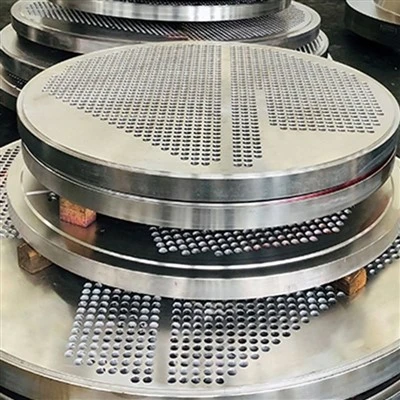
First up, porosity. This is probably the defect we deal with most often, and it’s exactly what it sounds like: tiny, air pockets or gas bubbles that get trapped inside the casting. I can’t tell you how many times a customer has sent us a part that failed pressure testing, only to cut it open and see a cluster of these little holes right where the part is supposed to hold fluid. So why do they form? There are a couple of reasons. Sometimes it’s the metal prep: if you don’t degas the copper alloy properly before pouring, the melted metal will absorb hydrogen, nitrogen, and oxygen from the air, and those gases don’t have time to escape before the metal solidifies. Other times, it’s the mold or core material—if the sand or ceramic in the mold has too much moisture, that moisture turns to steam when the hot metal hits it, and if the venting in the mold isn’t good enough, the steam gets stuck as bubbles. We once had a batch of brass valve parts come back for this exact reason; our mold maker had skimped on adding vents, and every other part had pinholes on the surface. The fix? We now add a degassing step with nitrogen flushing before every pour, and we test the moisture content of our mold sand daily. It’s a small extra step, but it saves us from reworking or scrapping dozens of parts a month.
Next, shrinkage. This one’s a little different from porosity because it’s not gas-related—it’s just the metal shrinking as it cools. Copper alloys expand when they melt, but they contract a lot when they solidify, especially in thick sections of a casting. If the metal in a thin section cools too fast while the thick section is still liquid, the thick area can’t draw in extra metal to fill the gap left by shrinkage, so you get a void or a depression, right where the part is under the most stress. I’ve seen this go wrong on large copper alloy bearing housings before; the thick wall at the base shrank so much there was a cavity inside that you couldn’t see until you machined the bore. How to prevent it? The key is to design the part with uniform thickness as much as possible—no sudden jumps from thin to thick. And if you can’t avoid thick sections, you add “risers” to the mold: little extra reservoirs of molten metal that feed the shrinkage area as the part cools. For those bearing housings, we now add a riser on the top of the thick wall, so it’s the last part to cool and keeps the gap filled. It’s easy to forget risers if you’re in a rush, but they’re non-negotiable for parts with uneven walls.
Then there’s cold shuts and misruns. These two sound similar, but they’re actually distinct. A cold shut happens when two streams of molten metal meet each other in the mold, but they cool down too fast to fuse properly. You get a thin, weak line on the surface where they met, like a crack but not as deep. Misruns are when the metal doesn’t even flow all the way through the mold cavity before it solidifies—so part of the casting is missing or has a thin, incomplete edge. Both usually stem from slow or uneven metal flow, or the metal getting too cold before it reaches all parts of the mold. For example, we once made a custom copper alloy flange that had a misrun on one side; our pour rate was too slow, and the metal started to solidify before it could fill the narrow, long path around the flange. Cold shuts happened on a set of copper fittings last year, when we poured two small parts at the same time with a single gate, and their streams collided instead of merging. To fix these, we adjust our pour speed—faster for parts with long paths, slower for smaller ones—and we add more gates to the mold so the metal flows evenly, not just in one thick stream. We also check the metal’s temperature right before pouring; if it’s too low, we heat it up a little more, so it stays liquid longer and fills the mold completely.
Surface defects are another big category, and the most common one here is sand inclusion. That’s when little bits of mold sand break off and get embedded in the casting surface, usually because the sand isn’t strong enough to hold up against the flow of hot metal. You end up with rough, pitted spots that you have to grind off, or if they’re deep, you might have to scrap the part. We dealt with this a lot when we first switched to green sand molds, before we upgraded our sand mixer—we were mixing in too much clay to save time, which made the sand crumbly and easy to break. The fix? We test sand strength every week, and we adjust the mixture to make sure it’s rigid enough but not too hard that it cracks during shakeout. Another surface defect is scabs, which are like small, raised patches on the casting. Those happen when a piece of the mold wall lifts up or bubbles when the metal hits it, leaving a raised area that solidifies. Scabs are mostly a mold prep issue—so we now make sure our mold halves are properly aligned and packed tight before pouring, and we avoid packing sand too hard in areas where it’s likely to shift.
Wait, can’t forget about segregation. This one’s a little trickier because it’s inside the metal, not on the surface. Segregation is when the elements in the copper alloy don’t mix evenly—like, the lead in a leaded brass casting sinks to the bottom of the mold, or a higher-strength copper alloy has pockets of pure copper where it shouldn’t be. Those pockets make the part weaker or more prone to corrosion, which is a problem for parts that go into outdoor equipment or plumbing. Segregation usually happens when the metal cools too slowly—especially in large, thick castings, the heavy elements separate out instead of mixing as they solidify. We prevent this by controlling our cooling rate: we quench smaller parts in water immediately after they solidify, and for larger ones, we use forced air cooling instead of letting them sit in the mold for hours. That keeps the elements mixed, so the part has the same strength all the way through.
Last but not least, cracks. There are two main types: hot cracks and cold cracks. Hot cracks form when the metal is still partially solid, right around the time it finishes cooling. The shrinkage makes the metal want to pull, but the solid part is too rigid to stretch, so it cracks. Hot cracks are usually along the grain boundaries, and they’re hard to see right away, but they show up when you machine the part. Cold cracks happen after the part is fully solid, usually from mechanical stress or thermal shock, like if you quench a part that’s too hot. We’ve had cold cracks on some small copper alloy gears a while back; we quenched them straight from the furnace, and the rapid temperature change made them split. Now we temper them after quenching, which reduces the stress, and we make sure the mold design has enough “draft” or taper so the part comes out of the mold easily, no pulling that causes stress.
Now, you might be thinking, “Okay, I know the defects, but how do I make sure my parts don’t have them when I source from a shop?” That’s the thing: a lot of these defects aren’t just bad luck—they’re a sign of how much a shop cares about quality. At our place, we do a full visual inspection on every casting before machining, plus pressure testing for parts that hold fluid, and ultrasonic testing for thicker parts to check for internal voids. We also track every batch of metal we use, so if a batch keeps having porosity issues, we can swap suppliers.
If you’re in the market for copper alloy castings and machining, don’t just go for the cheapest price. Ask about their quality control steps: do they degas the metal? Do they use risers for thick sections? Do they test the mold material? A shop that skips those steps might save you a few bucks upfront, but you’ll end up with parts that fail on the job, which costs more in the long run. We’ve had customers come to us after using a cheaper shop, saying half their parts failed pressure testing, and we have to rework them. That’s a headache no one needs.
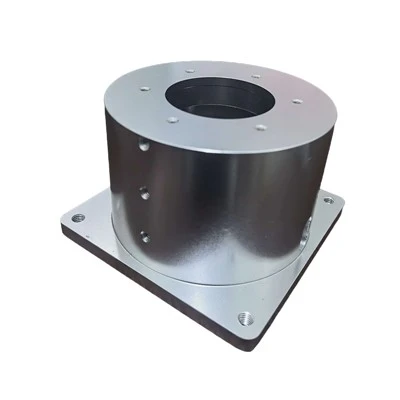
Whether you’re making parts for automotive, plumbing, industrial machinery, or anything else that uses copper alloys, being aware of these common defects helps you ask the right questions when sourcing. And if you’re looking for a reliable shop that sticks to quality—no cutting corners, no skipping those extra steps to avoid defects—we can help you out. Reach out to us to discuss your project, whether it’s a small custom casting or a large run of machined parts, and we’ll make sure you get parts that meet your specs, every time.
Copper Alloy Castings and Machining References
- Campbell, J. (2015). Castings Practice: The Ten Rules of Castings. Butterworth-Heinemann.
- ASM International. (2008). Copper Alloys: Casting, Welding, and Behavior. ASM Handbook, Volume 15: Casting.
- Davis, J. R. (Ed.). (2001). Copper and Copper Alloys. ASM International.
Sanming Hongfeng Machinery Manufacturing Co., Ltd.
As one of the most professional copper alloy castings and machining manufacturers and suppliers in China, we’re featured by quality products and good service. Please rest assured to wholesale customized copper alloy castings and machining made in China here from our factory. Welcome to contact us for quotation.
Address: No.2 Gaoyuan Industrial Zone, Chenda Town, Sanyuan District, Sanming City, Fujian Province, China
E-mail: smhfjxzsq@163.com
WebSite: https://www.smhfmachinery.com/
