If you’ve ever stood next to a piece of industrial equipment that hums with the rhythm of daily operations—whether in an oil refinery, a chemical processing plant, or a water treatment facility—you’ve probably walked past a gate valve without noticing it. These unassuming devices are workhorses, tasked with controlling the flow of fluids, and their ability to hold up under repeated stress directly impacts the whole system. As someone who’s spent 12 years in the gate valve material supply business, I’ve seen firsthand how one small choice—what a gate valve is made of—can mean the difference between a valve that lasts 5 years and one that keeps running for 20. Fatigue failure is the silent enemy here; it happens when repeated stress, vibration, or pressure changes cause tiny cracks to form and grow until the valve breaks. The material a gate valve is built from doesn’t just affect its initial cost—it’s the single biggest factor in how well it resists that fatigue. Gate Valve By Material
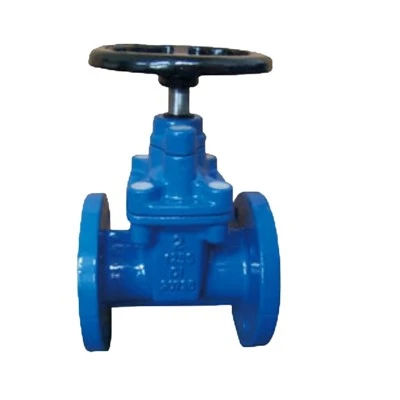
Let’s start by breaking down what fatigue in gate valves actually looks like, because it’s not just a single thing. Most industrial gate valves don’t open and close a few times a year; some cycle hundreds, even thousands of times a day. Each cycle puts stress on the valve’s components: the gate itself, the stem, the valve body, and the seating surfaces. Over time, even minor stress can create microcracks, especially at points where two metal parts meet, or where the material has small impurities. If the material is too brittle or has poor resistance to cyclic loading, those cracks will spread quickly. I remember a job early in my career where a plant installed gate valves made of a cheap cast iron alloy for a pipeline in a coastal area. Within 18 months, half of them had developed leaks along the valve body’s edge. When we pulled one apart, the cracks were exactly where material fatigue forms—at grain boundaries, where the metal’s structure is weakest from repeated pressure and saltwater corrosion. That’s when I first realized how much material choice isn’t just a technical detail; it’s a safety issue.
Now, the most common materials for gate valves each have their own strengths and weaknesses when it comes to fatigue. Let’s go through them, starting with cast iron, the oldest and still most widely used material for low-pressure applications. Cast iron is cheap, easy to machine, and corrosion-resistant in some mild environments—but it’s inherently brittle. That brittleness makes it terrible for fatigue resistance. Every time the valve cycles, the metal flexes just a tiny bit, and cast iron doesn’t handle that repeated flexing well. The microcracks form faster because the material’s grains don’t move to absorb stress; instead, they snap. We see this all the time in gate valves for residential water systems, where cycles are frequent but pressure is low—even there, cast iron valves often fail after 3-5 years, not from wear, but from fatigue.
Next, ductile iron. This was a game-changer about 40 years ago. Ductile iron is still cast iron, but with a small amount of magnesium added, which changes the shape of the carbon particles in the metal. That makes it far more flexible than regular cast iron. When stress is applied, the grains can bend and shift instead of breaking, so microcracks form much slower. I’ve supplied ductile iron gate valves to water treatment plants for municipal pipelines, and in those applications, their fatigue resistance is three times better than standard cast iron. That said, ductile iron isn’t perfect. In high-temperature or high-pressure environments, especially where there’s vibration from pumps, ductile iron can still develop fatigue cracks over time. It’s also more expensive than regular cast iron, so it’s a trade-off between cost and durability.
Then there’s carbon steel, the go-to for medium to high-pressure applications in oil and gas, chemical processing, and power generation. Carbon steel is strong, flexible, and much better at handling cyclic stress than either cast iron or ductile iron. Wait, why is that? Because carbon steel has a uniform grain structure that can absorb stress without forming cracks easily. I’ve tested carbon steel gate valves side-by-side with ductile iron ones in our warehouse lab; when we cycled them 10,000 times at 1,500 PSI, the ductile iron valve had a 1mm crack in the gate, while the carbon steel one showed no damage at all. That’s the difference fatigue resistance makes. But not all carbon steel is the same. Low-carbon steel is softer, so it handles fatigue better than high-carbon steel, which is harder but more brittle. I always tell clients working in high-cycle applications: go with low-carbon steel for gate valves, not high-carbon. The extra cost is worth it because the valve won’t fail mid-cycle.
Stainless steel is another common material, especially for corrosive environments. Stainless steel is chromium-alloyed, so it resists rust and corrosion—but how does it do with fatigue? Austenitic stainless steel, like 304 or 316, is actually one of the best materials for fatigue resistance out there. It’s extremely flexible, can handle both high pressure and temperature changes, and the chromium oxide layer on its surface prevents corrosion that would speed up fatigue. I supplied 316 stainless steel gate valves to a desalination plant in the Middle East a few years back, where saltwater is highly corrosive and the valves cycle 500 times a day. Three years later, they still haven’t had a single fatigue-related leak. Ferritic stainless steel, on the other hand, is more brittle than austenitic, so it’s not as good for cyclic stress. That’s why it’s important to specify the grade of stainless steel, not just “stainless steel,” when talking about fatigue.
Then there are the alloy steels, like chrome-moly (Cr-Mo) steel, used in extreme environments—high temperatures above 500°F, super high pressure, or both. These steels have added elements like chromium and molybdenum that make them very strong and resistant to fatigue even under extreme conditions. I’ve seen gate valves made of Cr-Mo steel run in refineries where temperatures cycle between 100°F and 650°F every day, and they’ve lasted over 15 years with no fatigue cracks. But alloy steels are the most expensive, so they’re only used when standard materials won’t hold up. You don’t want to use Cr-Mo for a residential water line, but it’s non-negotiable for a steam pipeline in a power plant.
Now, there’s a common mistake I see clients make all the time: matching the material to the pressure or temperature, but not considering the number of cycles. A valve rated for 2,000 PSI might work fine if it only opens a few times a month, but if it cycles 1,000 times a day, that same valve will fail from fatigue fast. Last year, a chemical plant came to us after 12 of their carbon steel gate valves had cracked in 2 years. Turns out, they’d installed standard high-carbon steel valves, meant for low-cycle use, in a system that cycles 800 times a day. The high carbon made the metal brittle, and the frequent cycles wore it down. We recommended low-carbon steel valves, and 18 months later, they haven’t had a single issue. That’s exactly how material choice interacts with fatigue: it’s not just about the environment, but how often the valve is moving.
Another factor that ties into material is surface finish. Wait, I know that’s not the material itself, but it’s directly related. A rough surface on a gate valve will have tiny scratches and imperfections that act as starting points for fatigue cracks, no matter what the material is. So even if you pick a great material, if the gate’s surface is rough, fatigue resistance drops by 30-40%. That’s why at our company, we use precision machining for all gate valve components, not just casting. We make sure every surface is smooth, so there’s no weak point where cracks can start. I learned this when a client used a competitor’s valve, same material, but with a rough gate, and it failed in 6 months. When they switched to our valves with smooth surfaces and the same metal, it lasted 5 years. It’s a small detail, but it ties back to how material interacts with production to fight fatigue.
Corrosion is another big one that amplifies fatigue. If a material is corroding, each corrosion pit is a stress raiser—like a tiny notch in the metal that makes it easier for a crack to spread. So a material that’s corrosion-resistant will have way better fatigue resistance than a similar material that rusts. For example, a carbon steel gate valve in a saltwater environment will corrode quickly, and that corrosion will speed up fatigue. But a 316 stainless steel valve in the same environment won’t corrode, so the fatigue stays low. That’s why material choice has to account for both cyclic stress and the environment; they work together.
I get calls all the time from plant managers who are tired of replacing gate valves. Most of the time, the problem isn’t bad luck—it’s the wrong material. A friend who’s a plant engineer for a major pipeline company tells me that their biggest maintenance cost isn’t the valves themselves, but the unplanned downtime when a valve fails. That downtime can cost thousands of dollars an hour, so investing in a material with better fatigue resistance saves way more money in the long run. It’s not just a cost vs. quality decision; it’s a business decision.
Let me share a real example: a municipal water system in the Midwest that was using standard cast iron gate valves for their distribution lines. They were replacing 20 valves a year at a cost of $5,000 each, plus $10,000 in labor and downtime. We worked with them to switch to ductile iron gate valves, and also adjusted the design to reduce stress on the valve body. After two years, they’re only replacing 2 valves a year, and the total cost has dropped by 85%. That’s the power of choosing the right material for fatigue resistance.
At the end of the day, there’s no one-size-fits-all material for gate valve fatigue resistance. Cast iron works for low-cycle, mild environments. Ductile iron is great for medium-cycle, low to medium pressure. Carbon steel is standard for high-pressure, high-cycle general industrial use. Stainless steel is best for corrosive environments, and alloy steels for extreme high temp/pressure. But the key is to understand how the valve is going to be used—how many cycles a day, what the temperature and pressure are, and what kind of fluid is running through it.

If you’re struggling with gate valve fatigue failure, don’t just go out and buy the cheapest valve you can find. Talk to someone who knows how material choice impacts fatigue. I’ve helped hundreds of plants troubleshoot this exact issue, and more often than not, a simple material switch has fixed the problem. We can work with you to assess your specific application, recommend the right gate valve material, and make sure you get a valve that lasts, reduces downtime, and saves you money over time. Reach out to us to discuss your gate valve needs and find the right solution for your operations.
Check Valve References
- ASME B16.34, Valves – Flanged, Threaded, and Welded End, American Society of Mechanical Engineers
- ASTM A216/A216M, Standard Specification for Steel Castings, Carbon, Suitable for Fusion Welding, for High-Temperature Service
- ASTM A395/A395M, Standard Specification for Ductile Iron Pressure Retaining Castings for Pressure-Containing Parts
- Fatigue of Engineering Materials and Structures, S. Suresh, Elsevier, 1998
- API 600, Steel Gate Valves for Petroleum and Natural Gas Industries, American Petroleum Institute
Yantai Valtone Valve Co., Ltd.
As one of the most professional gate valve manufacturers and suppliers in China, we have world-leading production equipment and strong manufacturing capabilities. Please rest assured to buy bulk durable gate valve for sale here from our factory. We also accept customized orders.
Address: No. 13, Wuhan street, Bajiao industry park, Yantai ETDZ, Shandong, China.
E-mail: liujun@valtone-valve.com
WebSite: https://www.valtonevalve.com/
