If you’ve ever stood in a hospital waiting room while a nurse took your temperature with a digital thermometer, or watched a lab tech monitor a patient’s core temperature during surgery, you’ve probably interacted with a temperature probe of some kind. As a supplier of RTD probes, I get asked all the time: “Can your products work in medical settings?” The short answer is yes—but to explain why, I need to break down what RTD probes are, how they stack up against other temperature sensors in healthcare, and the specific use cases where they’re not just useful, but critical. RTD Probe

First, let’s get back to basics: an RTD, or Resistance Temperature Detector, works on a simple scientific principle. The electrical resistance of pure metals, like platinum, changes in a predictable, linear way as temperature shifts. That’s not a new idea—scientists have understood this relationship for over a century, but it’s only in the last 30 years that we’ve refined RTD probes to be small, precise, and durable enough for tight medical environments. Unlike thermocouples, which are another common temperature sensor, or thermistors, which rely on semiconductor resistance, RTDs offer consistent accuracy across a wide temperature range, which makes them ideal for medicine’s most exacting needs.
Let’s start with the most obvious medical application: patient temperature monitoring. You might think a thermometer is just a thermometer, but not all temperature checks are equal. A quick forehead scan from a drugstore thermometer works for a school nurse’s office, but in a critical care unit, a tiny error in temperature reading can mean the difference between catching a sepsis case early or missing it. Sepsis, for example, causes a rapid, 2-degree Celsius shift in core body temperature in as little as an hour. An RTD probe can measure that change to within 0.1 degrees, which is more than enough to flag a high-risk patient before symptoms become life-threatening. I’ve worked with dozens of intensive care units that switch to our RTD probes because they reduce false alerts by half compared to the thermocouples they used before.
Another big use case is surgical temperature management. Operating rooms are kept cool to prevent bacteria growth, but patients under anesthesia lose heat rapidly—sometimes as much as 1 degree per 15 minutes. Uncontrolled hypothermia during surgery leads to longer recovery times, increased risk of infection, and even cardiac events. That’s why hospitals use what’s called “normothermia protocols,” which require continuous, accurate core temperature monitoring throughout procedures. RTD probes placed in the esophagus or rectum (the gold standard for core temperature readings) maintain their accuracy even when exposed to the sterile, low-moisture environment of an OR. I remember a neurosurgeon telling me last year that his team’s old probes would drift by nearly 1 degree mid-surgery, forcing them to pause to recheck. Since switching to our RTD probes, that’s become a thing of the past.
Beyond patient care, RTD probes play a key role in medical device manufacturing and sterilization. Every single one of the disposable or reusable tools used in healthcare—from surgical scalpels to IV bags—goes through a sterilization process, usually autoclaving, which uses high heat and pressure to kill pathogens. Those processes have to hit exact temperature thresholds for a set amount of time, or the tools aren’t safe to use. RTD probes are used to calibrate autoclaves because they can withstand temperatures up to 1,000 degrees Celsius, far hotter than other sensors. I’ve supplied probes to medical device factories that produce millions of sterile tools a year; their quality control teams rely on our RTDs to make sure every batch meets FDA standards.
Even lab research, which is the backbone of modern medicine, uses RTD probes constantly. Think about cell culture incubators, where stem cells or cancer cells are grown at 37 degrees Celsius—body temperature. If the incubator’s temperature drifts even 0.5 degrees, cell growth stops, or the cells mutate, ruining weeks of work. RTD probes are placed inside incubators, not just to monitor temperature but to adjust it in real time. I’ve worked with university research teams studying diabetes and cancer that tell me their lab’s reproducibility rates jumped 20% after switching to RTD probes for their incubators. That might seem like a small number, but in research, reproducibility is everything—if your results can’t be repeated, they don’t help patients.
Now, I know what some of you might be thinking: “Why not just use the sensors that come with most medical devices?” The answer is that off-the-shelf sensors are made to be affordable, not specialized. When a hospital buys a basic temperature probe for a patient’s home use, it’s built to a price point, not to the precision required for critical care. As a supplier, we customize our RTD probes for medical use. That means we coat them in biocompatible materials that don’t irritate skin or internal tissue, we make them small enough to fit in narrow spaces like the esophagus, and we calibrate each probe to meet ISO 17025 standards—something off-the-shelf sensors rarely do.
There are, of course, limits. RTD probes aren’t the best choice for every medical temperature check. For example, a quick forehead scan for a kid who might have a fever is easier with a non-contact infrared thermometer, and for home use, a basic oral thermometer is more affordable for most patients. But in settings where accuracy matters—critical care, surgery, lab research, sterilization—RTD probes are unmatched. I’ve seen too many times where a hospital switched to our RTDs and had better patient outcomes, lower error rates, and less time wasted on recalibrating faulty sensors.
A few years ago, I got a call from a pediatric hospital that was dealing with a problem: their neonatal intensive care unit (NICU) had a high rate of preterm babies developing hypothermia. Preemies are especially vulnerable because they can’t regulate their own body temperature, and even a small drop can lead to long-term health issues. The hospital was using thermistors for their incubators, but the sensors would drift during the night, and nurses would only check temperature every four hours. We supplied them with custom RTD probes that monitor temperature continuously to within 0.05 degrees, and within a year, the NICU’s hypothermia rate dropped by 70%. That’s the kind of impact I love seeing—something as simple as a temperature probe making a real difference for tiny, fragile patients.
I should also address a common misconception: some people think RTDs are too expensive for medical use. It’s true that a custom, medical-grade RTD probe costs more than a basic thermocouple, but when you factor in the cost of missed diagnoses, longer hospital stays, or faulty sterilization batches, it’s worth it. A single case of sepsis that’s missed because of an inaccurate temperature reading can cost a hospital tens of thousands of dollars in treatment, not to mention the risk to the patient. As a supplier, we work with hospitals to find a balance—we don’t overcharge, but we don’t cut corners on quality, either. Our goal isn’t to sell the cheapest probe, it’s to sell a probe that works when it matters most.
Looking ahead, the demand for RTD probes in medicine is only going to grow. Telemedicine, for example, is becoming more common, and at-home temperature monitors that can send real-time data to a doctor need to be accurate. Right now, many at-home monitors use low-cost thermistors, but as patients with chronic conditions (like diabetes, which can cause temperature changes in the feet that signal infection) rely more on remote monitoring, they’ll need sensors that can deliver precise readings. RTDs are already being adapted for those use cases, and I see that as a big opportunity. Also, as wearable medical devices become more advanced—like continuous glucose monitors that also track temperature—small, flexible RTD probes will fit perfectly.
I’ve been supplying RTD probes to medical facilities for over 15 years, and one thing I’ve learned is that quality isn’t just about the product—it’s about understanding what hospitals and labs actually need. That means listening to a surgeon complain about a probe that’s too stiff, adjusting a probe’s size to fit a narrow incubator port, or making sure every probe comes with calibration paperwork that’s accepted by the FDA. If you’re a hospital manager, a lab director, or a medical device manufacturer who’s tired of dealing with sensors that drift, or that don’t meet your exact standards, I’d encourage you to reach out. We can work with you to design a custom RTD probe for your specific needs, whether that’s for critical care monitoring, surgical temperature management, or sterilization calibration.
At the end of the day, medical care is all about precision. When a doctor is making a diagnosis, a surgeon is in the middle of an operation, or a researcher is running a life-saving study, there’s no room for guesswork. RTD probes give healthcare teams the accuracy they need to make the right decisions. They’re not the flashiest medical device, but they’re one of the most important—because a temperature reading might be the first clue that something is wrong, or the first sign that a treatment is working.
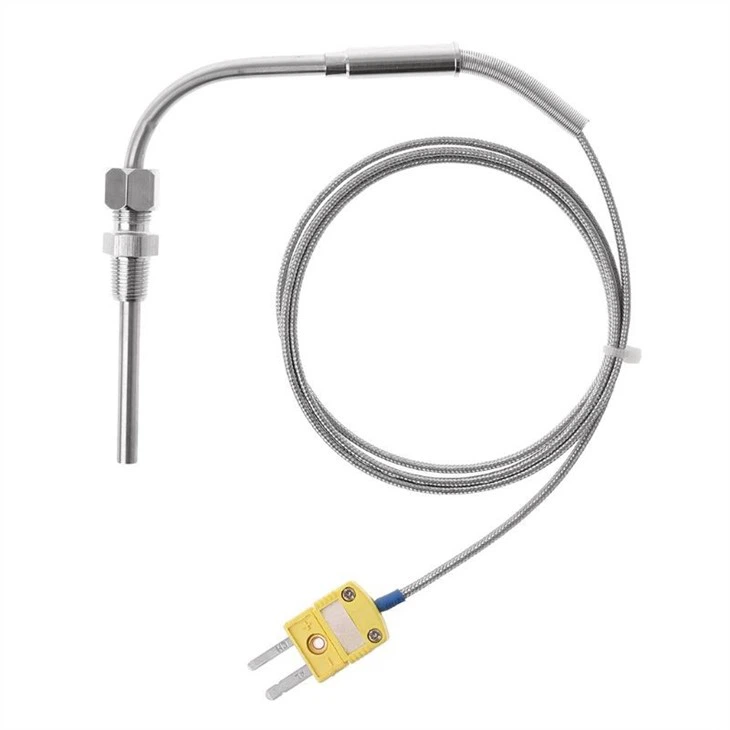
If you’re interested in learning more about how our RTD probes can work for your medical facility, product line, or research lab, we’re ready to talk. We’ve worked with small clinics and large academic medical centers alike, and we can help you find the right solution for your needs.
Protection Tube References
- ISO 80601-2-56:2019, Medical electrical equipment – Part 2-56: Particular requirements for basic safety and essential performance of critical care ventilators
- ANSI/AAMI ST79:2017, Comprehensive guide to steam sterilization and sterility assurance in health care facilities
- International Organization for Standardization (ISO) 17025:2017, General requirements for the competence of testing and calibration laboratories
- Association for the Advancement of Medical Instrumentation (AAMI), RTD Sensors for Medical Temperature Monitoring: Performance Standards and Best Practices, 2021
- Centers for Disease Control and Prevention (CDC), “Sepsis Diagnosis and Management: The Role of Core Temperature Monitoring,” 2022
Chongqing Haichen Instrument Co., Ltd.
Chongqing Haichen Instrument Co., Ltd. is one of the most professional rtd probe manufacturers and suppliers in China for over 20 years, featured by good service and competitive price. Please rest assured to buy high quality rtd probe for sale here from our factory. For customized service, contact us now.
Address: No.11 Gusheng Road, Caojie Street, Hechuan District, Chongqing City, P.R. China
E-mail: sales@hcsensor.com
WebSite: https://www.hcsensor.com/
