If you’ve ever shopped for plastic packaging, you know how important shape is—whether it’s a sleek oval cosmetic tube that fits perfectly in a pocket, a round canister for protein powder, or an irregular cylinder for a custom industrial part. I get asked this question all the time: “Can your automatic plastic cylinder machines make round or oval cylinders?” The short answer is yes, but there’s a lot more nuance than just flipping a switch, and as someone who’s been supplying these machines for over a decade, I want to break it down like I would chat with a customer over a coffee. Automatic Plastic Cylinder Machine
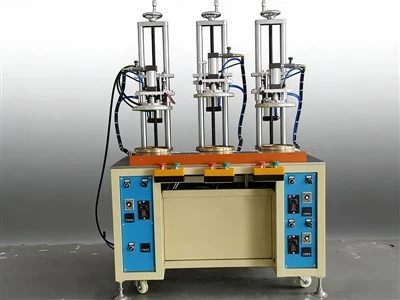
First, let’s clear up a common mix-up: automatic plastic cylinder machines aren’t one-size-f-all. A lot of people think “automatic cylinder machine” only does straight round parts, but that’s not true. Let’s start with how these machines work, because that’s the root of their shape flexibility. Most modern automatic plastic cylinder machines I supply use two key processes: extrusion for seamless cylinders and injection molding for joined (or “double-stitched” if you’re familiar with the term) cylinders. Both can be tweaked for round or oval shapes, but the method changes a bit.
For extrusion-based machines—super popular for high-volume stuff like cosmetic tubes, straws, and small food containers—think of it like squeezing Play-Doh through a custom-shaped hole. The extruder pushes molten plastic (usually PET, HDPE, or PP) through a die, which is the metal nozzle that shapes the cross-section. If you want a round cylinder, the die has a perfectly circular hole; if you want an oval, you just swap in an oval die. Wait, is that really all? For basic shapes, yeah, but there’s a catch. Extrusion works by pulling the plastic as it cools, so if your oval is too “flat” (like a cosmetic tube that’s oval so it doesn’t roll off a counter), you have to adjust the haul-off speed—the machine that pulls the finished plastic after the die. Too fast, and the oval gets distorted; too slow, and it warps. That’s where the automation I build into my machines shines: we have sensors that adjust haul-off speed in real time, so even if you switch between round and oval multiple times a day, you don’t waste 100 feet of plastic getting the shape right.
Then there’s the injection molding side, which is for cylinders that have caps or bases attached, or thicker-walled parts like paint cans or industrial containers. These machines use a mold—two halves that clamp together, inject molten plastic into the cavity, and pop out the finished part. To get an oval here, you just change the mold. Simple, right? But a lot of cheap machines on the market have fixed round molds, so if you want oval, you have to buy a whole new machine. Mine let you swap molds in less than an hour, even for round vs. oval, because I designed them with quick-change mold clamps. That’s a big deal for small to mid-sized runs—if you’re testing a new oval cosmetic line, you don’t want to wait a week for a custom machine, you just swap the mold and go.
But let’s talk about what “round or oval” actually means, because there’s a difference between a perfectly round cylinder (uniform diameter every inch) and a “round” tube that’s a little tapered (like a lotion tube, where the top is narrower than the bottom). Same with oval: you can have a symmetrical oval (equal on both sides) or an asymmetrical one, like a tube that’s wider on the top to fit a pump. My machines handle that too—for extrusion, we can adjust the die’s temperature in different spots to make one side slightly thicker, which tweaks the oval shape; for injection molding, the mold can be custom-cut to any asymmetrical oval you need.
Now, I should mention a common myth: some people think automatic machines can’t make “irregular” cylinders, like a cylinder that’s round at the top and oval at the bottom. Wait, can they? Yeah, but that’s a custom job, not a standard setup. Most of my customers don’t need that, but if you’re making a unique product, I can work with you to design a die or mold that fits. The key here is that automation removes the human error—if you tried to do this with a manual machine, you’d have a lot of parts that are too oval, too round, or warped. My machines have built-in quality checks: a laser sensor scans the cylinder’s cross-section as it comes off the line, and if it’s even a fraction of a millimeter off round or oval, it rejects it automatically. That means no wasted material, no bad parts getting sent to your customers.
Let me throw in a real example to make this concrete. Last year, a small cosmetic brand came to me—they were making a new line of hand cream tubes that needed to be oval so they wouldn’t roll off bathroom counters. They’d been using a manual machine that kept making the oval too lopsided, and they were wasting 20% of their plastic every run. We sent them a machine with quick-change oval dies, adjusted the haul-off speed, and added the laser sensor. In their first run, the reject rate dropped to less than 1%, and they could switch between their existing round lotion tubes and the new oval hand cream tubes in 45 minutes flat. That’s the kind of win I live for.
But wait, there’s a limit, right? I can’t make a cylinder that’s 10 feet tall and oval, or a super tiny oval tube for a lip gloss that’s less than 5mm wide. Those are specialty parts that need custom machinery, but for 99% of the products my customers make—cosmetic tubes, food containers, industrial canisters, stationery—round or oval is totally doable. The biggest mistake people make when shopping for an automatic plastic cylinder machine is not specifying upfront what shapes they need. If you tell a sales rep you might want to switch between round and oval, you don’t want a machine that only does round. You want one with interchangeable dies/molds, automatic speed adjustments, and quality checks.
Another thing to consider: material. Some plastics are easier to shape for ovals than others. PET is super flexible and holds shape well, so it’s great for ovals. HDPE is a little stiffer, so you might need a slightly thicker wall for oval parts to keep them from warping. PP is in between. I always work with customers to pick the right material for their shape, instead of just saying “oval is easy.” That’s the value of being a supplier, not just a salesperson—I don’t sell you a machine and walk away, I help you make it work for your products.
Let’s address the “automatic” part too, because that’s in the question. A lot of old automatic machines would only do one shape, because their programming was fixed. The machines I supply are programmable—you can save a round shape setting and an oval shape setting, so when you want to switch, you just pick it from the touchscreen, and the machine adjusts the die temperature, haul-off speed, and sensor parameters automatically. No need to mess with knobs or calibrate for an hour. That’s the modern automation difference, and it’s why so many customers switch to my machines from older models.
Wait, what about double-walled cylinders? Like a cosmetic tube with an inner layer and an outer layer, for lotion that needs to stay fresh. Can those be round or oval too? Yep. For co-extrusion machines (which make double-walled parts), you just have two oval dies nested together, so the inner and outer layers are both oval, perfectly aligned. I’ve had customers make oval double-walled tubes for premium skincare, and the machines do it consistently. No misaligned layers, no warping between inner and outer shapes.
Is there any scenario where an automatic plastic cylinder machine can’t make round or oval? Only if the shape is so extreme that it can’t be formed with plastic extrusion or injection molding. For example, a super flat oval that’s 6 inches wide and only 1 inch tall might be possible, but it would need a custom die that’s not standard. But for standard oval shapes—like the ones you see in drugstore cosmetic tubes or travel-sized toiletries—they’re totally standard. I make dies for those all the time, and they fit on the same machines that do round parts.
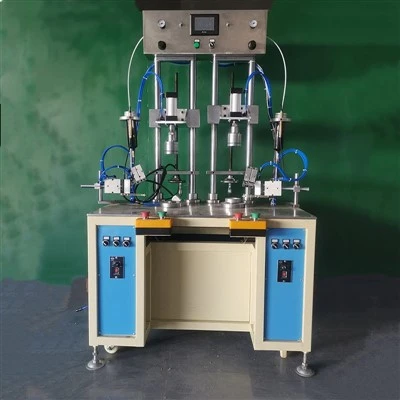
Let’s wrap this up. The answer to “Can automatic plastic cylinder machines produce round or oval cylinders?” is a resounding yes—if you have the right machine. Skip the cheap models with fixed molds/dies; go for one with interchangeable shape tools, automatic adjustment features, and quality controls. As someone who’s been in this game, I can tell you that shape flexibility is one of the biggest perks of modern automatic machines, not a limitation. If you’re in the market for a machine that can handle both round and oval, don’t hesitate to reach out to get the details on what we can customize for your needs. We can walk through your product specs, talk through material choices, and make sure the machine fits your production goals. Just get in touch to start the conversation.
Sheet Cylindrical Forming Machine References
- Engineering Toolbox. (n.d.). Extrusion of Plastics: Cross-Section Shaping and Process Parameters.
- Society of Plastics Engineers. (2021). Injection Molding for Custom Container Shapes.
- Packaging Digest. (2022). Trends in Plastic Packaging Shape Flexibility for High-Volume Production.
- International Journal of Advanced Manufacturing Technology. (2020). Automation Tools for Precision Shape Control in Plastic Extrusion Processes.
- Cosmetics & Toiletries Magazine. (2023). Shape Optimization for Plastic Cosmetic Tubes: Round vs. Oval Designs.
Titagong (Dongguan) Machinery Co., Ltd.
We are one of the most reliable manufacturers and suppliers of automatic plastic cylinder machine in China. With abundant experience, we warmly welcome you to buy bulk high quality equipment in stock here and get pricelist from our factory. For price consultation, contact us.
Address: No.149, Qingyi Road, Qingxi Town, Dongguan City, Guangdong Province, China
E-mail: shuaizoe@gmali.com
WebSite: https://www.titagonggroup.com/
