If you’re in the flexible packaging, printed textiles, or security printing game, you’ve definitely worked with gravure rollers—those super precise, engraved cylinders that transfer ink in those tiny, uniform cells to get that sharp, consistent print. As a gravure roller supplier who’s been in this niche for over 12 years, I get that most folks don’t stop to think about what goes into making a roller that can crank out 500k+ prints without skipping a beat. It’s not just slapping some engraving on a metal tube, let me tell you. This process is equal parts metalworking magic, high-tech engraving, and brutal quality checks that’d make even the pickiest printing manager breathe easy. Let’s break it down, step by step, like I’d explain it to a newbie at a trade show booth. Gravure Roller
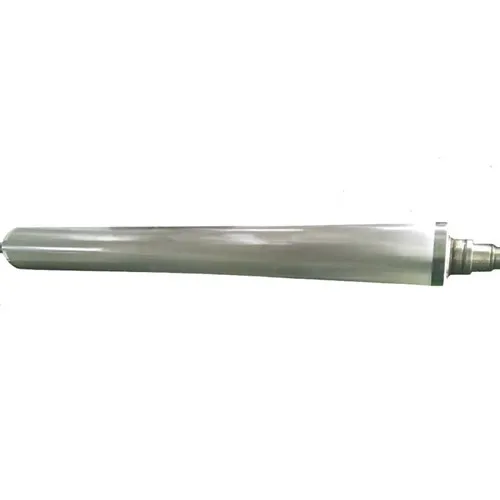
First off, the base tube. You can’t just grab any random steel pipe for this—cheap stuff warps faster than a pizza box in a microwave. We use cold-drawn seamless steel alloy (sometimes aluminum for lighter, flexographic-style jobs, but steel’s our workhorse) because it’s denser, has way less internal stress, and can hold tight tolerances. Wait, tolerances are key here—we’re talking thousandths of an inch, like, 0.0005 inches off and the roller’ll wobble, causing blurry prints. First step: cutting the raw tube to length, then facing both ends so they’re perfectly flat (no sloped edges that’ll mess up your mounting). Then comes centerless grinding—no more wobbly tubes here. We spin the tube between two abrasive wheels, one pushing, one guiding, until the outer diameter (OD) is within that tiny tolerance. Oh, and we always do a pre-grind stress relieving step first, because cold drawing leaves hidden stress that’ll make the tube bend later. Skipping that? You’ll get a roller that’s fine one minute, warps after 200 prints—total waste of time and money, and no customer wants a redo.
Next, polishing. Wait, why polish a metal tube before adding the chromium? Because a rough surface will cause the chrome plating to flake off, especially when you’re running high-viscosity inks or cleaning with harsh chemicals. We use a series of abrasive belts, starting with 120-grit up to 1200-grit, then a final buffing with a soft cloth and polishing compound until the surface is so smooth it’s almost mirror-like. No scratches, no tool marks—any tiny imperfection here turns into a cell that holds too much ink, leading to smudges. I’ve seen competitors skip this step to save time, and their rollers only last half as long as ours. Not cool.
Then the big one: hard chrome plating. This isn’t the fancy chrome on your car bumper—this is industrial-grade, 0.001 to 0.003 inches thick, applied via electroplating. The tube’s submerged in a chromium electrolyte solution, hooked up to a power source, and chrome ions stick to the metal. Why chrome? It’s super hard (Rockwell C 60+, same as a ball bearing), corrosion-resistant, and the surface is perfectly uniform. We control the current density and temperature of the bath like a hawk—too hot, the chrome gets brittle; too cold, it’s porous. Porous chrome means ink seeps into the tiny gaps, and before you know it, your prints have faint streaks. Once plated, another grind and polish to get that OD perfect again, and we do a pinhole test with a vacuum to make sure there’s no weak spots.
Now the part everyone cares about: engraving the cells. This is where gravure rollers get their superpower—those tiny, precision cells that hold exactly the right amount of ink. There are three main methods we use, depending on what the customer needs:
First, mechanical engraving (also called diamond engraving). This is the OG, and it’s still the best for high-volume jobs like snack packaging or wallpaper. We use a computer-controlled diamond tool (diamonds are hard enough to etch chrome) that carves individual cells into the roller surface. The size and shape of the diamond tip determines the cell’s volume—smaller tips for fine lines, larger for solid blocks. We program the pattern directly from the customer’s print file, so there’s no misalignment. Wait, and the cell angles—usually 60 degrees, sometimes 90, depending on the ink type. 60-degree cells hold ink better and release cleaner, which cuts down on press downtime. For a standard 100cm roller, we carve around 150 cells per linear inch—any less and the print looks grainy, any more and the cells are too small, leading to inconsistent ink transfer. I’ve had a customer come to us before with a roller that had 200 cells per inch, and it kept clogging with latex ink—we adjusted to 140, and their waste dropped by 18%.
Second method: chemical etching. This is cheaper, usually for short runs or custom jobs where you don’t need super-high precision. We coat the chrome with a photoresist film, expose it to a pattern (same as your phone screen, but way bigger), then dip the roller in a chemical that eats away the unprotected chrome, leaving cells. The downside here? The cells are less uniform—each one can vary a little in volume, which means your print might be a tiny bit lighter or darker in spots. We only recommend this for jobs where cost is the top priority, not ultra-fine detail.
Third, laser engraving. This is the newest kid on the block, and it’s perfect for security printing—like banknotes, brand labels that can’t be faked. A high-powered laser burns cells into the chrome, no physical tool touching the roller, so the pattern is super precise. We can even make textured cells, which add a tactile feel to packaging or labels. The only catch? Laser engraving is more expensive up front, but it’s way faster than diamond engraving for complex patterns. We use it for clients making pharmaceutical packaging, where every tiny detail has to be exact to avoid counterfeits.
Once the cells are done, we do what’s called “cell measurement” to make sure every cell is within the customer’s required volume. We use a profilometer—super sensitive machine that scans the roller and calculates how much ink each cell holds. If one cell is off by more than 5%, the whole roller gets re-engraved. No exceptions. A bad roller means bad prints, which means the customer loses money, and that’s bad for both of us.
Then comes the “finished roller” prep for the press. We balance the roller, because even a tiny weight difference on one side will make it vibrate at high press speeds. Most presses run at 100+ meters per minute, so unbalanced rollers shake, cause ink splatter, and wear out the press’s anilox roll or doctor blade faster. We do both static balance (to check for heavy spots) and dynamic balance (to make sure it’s balanced when spinning at full speed), and we mark the roller’s “keyway”—the slot that connects it to the press drive, so it fits perfectly every time.
Finally, quality control. We don’t just check the roller in our shop—we test it at a partner press for half a shift, running actual ink and the customer’s print design. If there’s a single smudge, a cell that’s clogged early, or a tolerance that’s off, it goes back. That’s why our rollers have a 95% pass rate on first try, which is way higher than the industry average.
I know this sounds like a lot of work for a metal cylinder, but that’s why gravure printing still beats digital for high-volume, high-quality jobs—especially when you’re printing on flexible materials like plastic film or aluminum foil. Every step is designed to cut down on downtime, reduce waste, and give you a print that’s consistent, job after job.
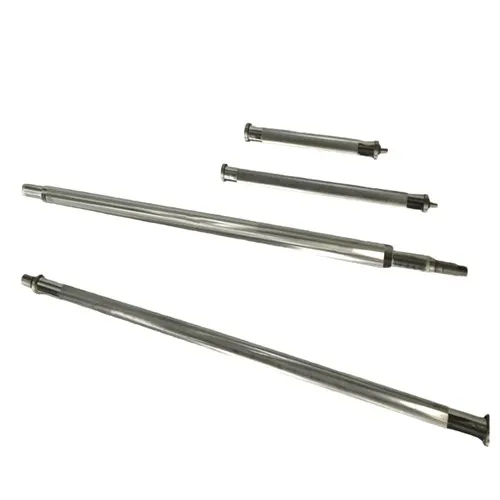
If you’re running a printing operation and need rollers that hold up, don’t waste time with cheap, off-the-shelf ones that’ll only last a few runs. Reach out to us to discuss your specific needs, whether it’s a short-run custom job or a high-volume line of snack packaging. We can tweak the cell size, the chrome thickness, even the engraving method to fit your press and ink type. No one-size-fits-all here—we build each roller to order, just like you need it.
Consumable References
- Gravure Printing Technology: Fundamentals and Applications, 2nd Edition, Society of Manufacturing Engineers
- Industrial Chrome Plating Standards, National Association of Metal Finishers
- Precision Engraving for Graphic Arts, International Print Technology Association
- Roller Balance and Vibration Control for Industrial Printing Presses, Journal of Manufacturing Processes
Kunshan Hanhan Co., Ltd.
We’re well-known as one of the leading gravure roller manufacturers and suppliers in China. We warmly welcome you to buy high quality gravure roller made in China here from our factory. If you have any enquiry about cooperation, please feel free to email us.
Address: No. 1093, B Zone, No. 2 Xugongqiao Rd, Huaqiao Town, Kunshan City, Suzhou, Jiangsu, China
E-mail: info@kshhroller.com
WebSite: https://www.kshh-roller.com/
