Hey there, I’m Jake, and I’ve spent the last ten years nerding out with spinning-forming equipment—most days, I’m troubleshooting a machine that won’t grab a workpiece right or helping a shop owner scale a part that used to take 3 hours to make in 45 minutes. Let’s cut through the fancy engineering jargon because I know most of you reading this aren’t here for a textbook thesis. You’re probably looking at a round metal part right now, wondering how it went from a flat disk in a drawer to that perfectly curved, precise piece you need for your next project—whether that’s a bicycle wheel hub, a medical device casing, or a rocket fairing segment. Spinning-forming equipment isn’t magic, but it’s way cooler than it sounds, and I get to be the guy helping shops unlock its full potential. So today, let’s walk through how these machines actually shape workpieces—no stuffy PhD talk, just real-world stuff I see every day. Forming Equipment
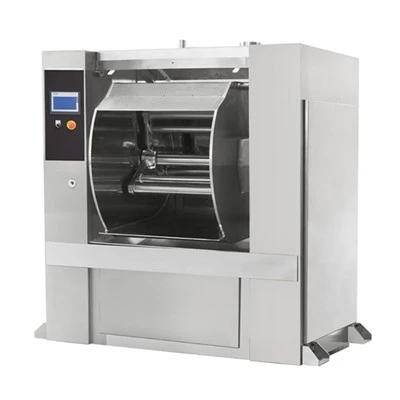
First off, let’s get the basics straight: spinning forming isn’t the same as regular machining, stamping, or even 3D printing. If you’ve ever played with a plastic milk jug and heated the bottom edge until it softens, then carefully shaped it by pinching and spinning it between your fingers to make a little cup, you’ve basically done manual spinning. That’s exactly what automated spinning-forming machines do, just with way more precision, force, and consistency—no burnt fingers, no lopsided edges. The core job of any spinning-forming equipment is take a symmetric, round blank (usually metal, sometimes plastic or composite, but metal’s our bread and butter) and deform it incrementally to match a custom-shaped tool called a mandrel. But here’s the thing that trips new users up: it’s not about smashing the workpiece into the mandrel all at once. It’s a controlled, step-by-step process that feels like a mix of turning, bending, and stretching, all coordinated by machine software.
Let’s break down the process step by step, like we’re watching a machine go through a cycle, so you can picture it. First, setup. This is half the battle, and I see new operators mess this up all the time, which leads to bad parts and wasted material. First, you grab your blank—say, a 6-inch flat aluminum disk, perfect for a automotive brake drum cap—and you load it into the headstock of the spinning machine. The headstock clamps the center of the blank, right? Then you line it up dead center on the spindle, so it spins perfectly straight when the machine runs—if it’s off by even a fraction of a millimeter, you’re going to end up with a lopsided part that’s useless. Next, you mount the mandrel. The mandrel’s the secret sauce here—it’s custom-made to exactly match the inner shape of the part you want. So if you need a part with a 4-inch outer diameter, a 1-inch neck, and a flared lip, that’s exactly what the mandrel looks like. No shortcuts here; a bad mandrel = bad parts, and good mandrels take time to machine, which is why we work with shops to design them before the machine even arrives.
Once everything’s locked in, the machine’s spindle starts turning—usually between 50 and 500 RPM, depending on the material. Soft stuff like copper might spin faster, thick steel needs slower speeds to avoid tearing. Then comes the spinning rollers. These are hardened steel or composite tools, usually two or three working at once, that glide along the outer surface of the blank. Here’s the key part: they don’t push hard all at once. The machine’s CNC controller maps out a detailed path for the rollers, step by tiny step, moving them closer to the mandrel with each pass. Let’s take that brake drum cap example: first pass, the roller just nudges the outer edge of the blank inward, bending it slightly toward the mandrel. Second pass, it goes a little deeper, stretching the metal a tiny bit more. Third, fourth, fifth—over 10 to 20 passes, gradually working your way from the edge inward, until the metal’s perfectly pressed against the mandrel. That incremental approach is why spinning forming works so well: it doesn’t put all the stress on one spot, so you can shape really thin or really thick materials without cracking, warping, or tearing. Compare that to stamping, which often needs huge presses and can cause material defects if not done right—spinning’s way more forgiving for custom, low-to-medium volume parts, which is why so many aerospace and medical shops swear by it.
Wait, let’s talk about material behavior, because that’s what makes or breaks a good spin. Metal isn’t a solid block that just bends when you push it—its grains shift when you apply force, and it gets stronger as you deform it. That’s called work hardening, and it’s both a friend and a foe. For example, if you’re spinning stainless steel, it’ll harden as you work it, so sometimes you need to pause between passes and heat the part slightly to soften it back up, which is called hot spinning. Aluminum, on the other hand, work hardens way less, so you can spin it all in one go without stopping. Our equipment lets operators adjust the roller pressure, RPM, and even add heated air or a coolant mist mid-cycle to account for that—we build our machines with those adjustments standard, because we’ve seen shops waste weeks messing with parts because they didn’t have that flexibility.
Now, you might be wondering: can spinning only make round parts? Short answer: mostly, but that’s not a limit anymore. Wait a second—wait, no, traditional spinning is symmetric around a central axis, right? But we also have what’s called orbital spinning, and even asymmetric spinning for parts that are almost round, like custom turbine blades or off-axis medical implants. But 90% of the work our customers do is symmetric: wheel rims, pressure vessels, cookware, rocket nose cones, wind turbine hubs. That’s where spinning-forming really shines because it produces parts with super consistent wall thickness—way more consistent than stamping, which can thin out at edges or corners. For example, a customer of ours makes stainless steel beer kegs—they used to have a lot of kegs leaking because the stamping process would thin the neck too much. Now, using our spinning equipment, the wall thickness is within 0.05mm across the whole keg, so almost zero leaks. That’s the kind of result we live for.
I should also mention the different types of spinning processes our equipment is built for, because not all jobs are the same. First, there’s conventional spinning, which is what I described earlier—you shape a flat blank into a curved part, and the final part’s inner shape matches the mandrel. Then there’s tube spinning, where you start with a pre-formed tube instead of a flat disk, and you reduce its diameter or shape it into a tapered or flared part—great for hydraulic cylinders or drive shafts. Flow forming is another one, which is even more precise, used for high-stress parts like aerospace landing gear components. Our machines are built to handle all of these, because we don’t sell one-size-fits-all equipment—we work with each customer to figure out what process they need, whether they’re making 100 wheel rims a month or 10,000 pressure vessels a year.
Let’s be real, though—this process isn’t set-it-and-forget-it. A lot of new operators think they can plug in a part program and walk away, but you have to watch the first few parts closely. Spinning is sensitive to everything from the room temperature (cold metal’s stiffer, so you need more roller pressure) to how the blank was cut (a slightly off-center blank will cause wobbling). That’s why we provide on-site training for every customer who buys our equipment—we don’t just drop a machine off and disappear. I’ve had to drive 6 hours to a shop in Detroit where their new machine was spitting out lopsided parts, just to realize they loaded the mandrel backwards—simple mistake, easy fix, but without training, they would’ve wasted a whole month of production.
What’s also cool about modern spinning-forming equipment is the software. Ten years ago, you had to write all the part programs by hand, which took days for a complex part. Now, our machines come with CAD/CAM software that lets you upload a 3D model of your part, and the software automatically generates the roller path, RPM, pressure, and even cycle time—no coding required. You can tweak the design on your computer, generate a new program in 10 minutes, and test it on a prototype blank before running production parts. That’s a game-changer for startups or small shops that don’t have a full engineering team. I worked with a small medical device maker last year who needed a custom titanium casing for a new insulin pump—they designed it in SolidWorks, uploaded it to our machine, and had a prototype ready in 2 hours. Before, they would’ve had to send the design out to a machine shop and wait 2 weeks, costing them thousands in missed deadlines.
Now, let’s talk about common myths I hear all the time, because that’s usually what stops shops from giving spinning a shot. First myth: spinning is only for low-volume parts. Wrong—modern CNC spinning machines can run 24/7, producing thousands of identical parts with way less labor than stamping. Our customer in Ohio makes aluminum cookware and runs their machine 3 shifts a day, putting out 500 pots a day, with only one operator checking parts every hour. Second myth: spinning is only for soft metals. Nope, we spin everything from thin aluminum foil for aerospace antennas to thick steel for construction parts, even titanium and Inconel for medical and aerospace. The equipment’s just built for higher pressure and precision—our heavy-duty spinning machines can handle parts up to 10 feet in diameter, perfect for those big aerospace segments. Third myth: it’s too expensive for small shops. Yeah, a new spinning machine costs more than a manual lathe, but compare it to the cost of stamping dies or outsourcing parts—over time, it pays for itself. A lot of our customers used to outsource 60% of their parts, and now they make them in-house, saving 40-50% per part, plus cutting lead times by half. That’s the kind of ROI that makes small shop owners call us up excited, not stressed.
Wait, let’s circle back to how the equipment actually shapes the workpiece, because that’s the core question. Let’s rephrase it in plain terms: at its core, a spinning-forming machine uses controlled, incremental, symmetric force to deform a blank along a rotating axis, guided by a precision mandrel and CNC programming, to create a part with consistent wall thickness, smooth surfaces, and complex shapes that are hard to make with other methods. It’s like a high-tech version of that milk jug trick, but with industrial-grade force, precision, and automation. The magic is in the coordination of the spindle speed, roller path, and pressure—get that right, and you get a perfect part every time; mess one tiny setting, and you’ve got scrap metal.
If you’re still reading, you’re probably wondering if spinning-forming is right for your next project. Maybe you’re tired of paying exorbitant prices for outsourced custom round parts, or maybe you’re struggling with defects from stamping or machining. We work with everyone from startups to Fortune 500 companies, tailoring spinning-forming equipment to your specific needs—whether you need a small benchtop machine for a prototype shop, or a heavy-duty 10-foot machine for large aerospace parts. We offer flexible financing, on-site training, and 24/7 support, so you’re never stuck when something goes wrong.

If you’re ready to stop dealing with outsourcing lead times and part defects, and start making your custom round parts in-house with consistent quality and lower costs, reach out to our team to chat about your spinning-forming equipment needs. We’re here to help you figure out exactly what kind of machine works for your production, no pressure, no fine print.
Dough Mixer References
- Hsu, C. H., & Jou, M. (2019). A review of spinning processes for metal parts: Equipment, materials, and applications. Journal of Manufacturing Processes, Vol. 44, pp. 217-232.
- Allwood, J. M., & Lavery, A. J. (2016). Metal spinning: Technology, principles, and applications. Butterworth-Heinemann.
- Tschaetsch, H. (2021). CNC spinning machines: Design, operation, and process optimization. Industrial Press Inc.
Guangdong Pinchain Machinery Co., Ltd.
As one of the most professional forming equipment manufacturers and suppliers in China, we have world-leading production equipment and strong manufacturing capabilities. Please feel free to wholesale advanced forming equipment made in China here from our factory.
Address: Room 302, Building 9, CIMC High tech Intelligent Manufacturing Center, No.3 Chanxing 1st Road, Xianyong Village, Chencun Town, Shunde District, Foshan City, Guangdong Province
E-mail: kowa@bakingmachinery.com
WebSite: https://www.bakingsmachinery.com/
