Hey there! If you’ve ever stared at two battery packs side by side, one labeled Li-ion and the other NiCd, and thought “wait, what’s actually the difference here besides the letters?”—you’re not alone. As someone who’s been in the lithium-ion battery game for years (I run a small but scrappy battery supply operation, so I talk tech specs and customer pain points every single day), I get that people don’t just care about “battery types” for the sake of it. They care about how this impacts their power tools, their camping gear, their RVs, even the backup power for their home office. Let’s break this down like we’re geeking out over our go-to gadgets at a weekend BBQ, no stuffy textbook jargon required. Lithium Ion Battery
First off, let’s start with the basics: what even are these batteries, chemically? NiCd is short for nickel-cadmium, which has been around since… wait, the 1890s? Yeah, it’s like that vintage portable radio that still works but weighs 10 pounds. Li-ion, lithium-ion, hit the scene way later—commercialized in the 90s—so it’s the newer, flashier cousin that everyone’s obsessed with now. But the real differences aren’t just birth dates; they hit performance, cost, maintenance, even how you treat them when they’re done.
Let’s talk about capacity, because that’s the big one that makes or breaks a battery for most people. Capacity is basically how much juice a battery can hold, right? Measured in milliamp-hours (mAh) or amp-hours (Ah, if we’re talking bigger stuff). Li-ion crushes NiCd here. Let’s use a real example: a 18650 Li-ion cell (the tiny, cylinder one you find in laptops, power banks, and e-bikes) usually hits 2500 mAh or more. A NiCd cell the exact same size? Maybe 1000 mAh, if you’re lucky. That means your Li-ion power drill will run twice as long on one charge as a NiCd drill, same physical size. For someone like me, that’s why every single one of my customers who uses power tools switches from NiCd to Li-ion within a year—they stop being mid-project because their battery died. Also, NiCd’s capacity drops like a rock after a few hundred charge cycles, while Li-ion holds steady way longer. I’ve got a 3-year-old e-bike battery from my supplier (shameless plug, but it’s true) that still hits 90% of its original capacity, whereas the old NiCd one that came with my first e-bike was dead after 18 months.
Next up, weight. Let’s be real—no one wants to haul around a brick if they don’t have to. NiCd is super dense, so same capacity as Li-ion, NiCd is way heavier. I once helped a customer swap out a NiCd battery for an RV solar setup: the Li-ion was half the weight, so they didn’t have to reinforce their compartment shelf. That’s a huge win for anyone hiking, biking, or hauling gear where extra weight matters. Li-ion is lightweight, which is why they’re in everything from smartphones to drones. NiCd? It’s like carrying a textbook instead of a novel—same info, way more weight.
Charging habits—this is where a lot of people get tripped up. NiCd has that infamous “memory effect,” right? Wait, is that actually real? Yeah, but it’s overblown sometimes, but it’s still a thing. What happens is if you charge a NiCd battery over and over when it’s only half-drained, it “remembers” that lower capacity and acts like it can only hold that much. Like, if you always plug in your drill after using it for 10 minutes, over time it’ll only run for 5 minutes. To fix it, you had to fully drain it and recharge it all the way—every single time. That’s a pain, especially if you’re in a hurry. Li-ion? Almost no memory effect. You can top them off whenever, plugging in even if they’re not dead, and it doesn’t hurt them at all. That’s why we all keep a power bank in our bag and top it off between meetings—Li-ion makes that totally hassle-free. Also, charging speed: Li-ion charges way faster. A 2000 mAh Li-ion cell can be fully charged in an hour, while the same NiCd might take 3 hours or more. For my customers who run construction crews, that means less downtime waiting for batteries to charge—money saved, basically.
Discharge rate, meaning how fast the battery lets out power when you’re using it. Li-ion has a higher discharge rate, so they can handle sudden, high power demands. Think about a power drill that needs a burst of torque to drill through a 2×4—Li-ion will deliver that consistent burst, while NiCd might sputter. Same with e-bikes when you’re climbing a steep hill—Li-ion keeps up. NiCd’s discharge is more gradual, so it’s fine for low-draw stuff like a remote control, but not so great for high-power tools or gear.
Now, let’s talk about the ugly parts: safety and environmental stuff. NiCd uses cadmium, which is a toxic heavy metal. Like, super toxic—bad for the soil, bad for water, bad if it leaks. So disposing of NiCd is a hassle; you can’t just throw them in the trash, you have to take them to a special e-waste drop-off. Li-ion is way better here—they don’t have cadmium (or lead, like old car batteries), though they do have lithium, which is recyclable these days. Also, safety: Li-ion does have a tiny risk of thermal runaway if damaged, right? But modern Li-ion batteries have built-in safeguards (like temperature sensors, circuit boards) that prevent that. NiCd can leak too, and cadmium leaks are way worse for your gear and the environment. I had a customer a few years back who left a NiCd-powered flashlight in their basement over the winter; it leaked all over the carpet, and they had to replace the whole thing, plus the smell was terrible. Li-ion leaks are rare, and not nearly as toxic.
Wait, what about cost? Let’s be honest, that’s a big one. Li-ion is more expensive upfront than NiCd. A Li-ion power drill battery might cost $50, while a NiCd same-sized one is $30. But wait, over time? Li-ion is cheaper. Because they last longer, hold more charge, don’t need that fancy disposal, and you don’t have to replace them every year like NiCd. I always tell my customers: spend a little more now, and you won’t be buying a new battery every 18 months. For small businesses or people on a tight budget, that initial sticker shock is real, but the long-term savings are massive.
Let me also clear up a common myth: people used to say NiCd was better for cold weather, but that’s not really true anymore. Modern Li-ion batteries perform way better in low temps than old Li-ion, and even better than NiCd in most cases. I tested this last winter when I was camping: my Li-ion camping lantern worked perfectly at 20 degrees F, while a friend’s NiCd headlamp died halfway through the night. That’s a game-changer for outdoor folks.
So who should use which? If you’re looking for something cheap for a tiny, low-draw device like a TV remote, NiCd is fine (though even there, Li-ion is getting cheaper). If you’re using power tools, e-bikes, RVs, backup power, or anything where you need performance, long life, and low hassle—Li-ion is the obvious choice. At my battery supply shop, we get a lot of customers who used to buy NiCd because it was cheaper, but they come back after 6 months because their NiCd died and they want Li-ion now.
Wait, why am I rambling about this? Because I’ve seen too many people get stuck with the wrong battery type, and I want to help. If you’re reading this and trying to pick between Li-ion and NiCd for your project, drop a line— I can hook you up with samples, explain more, and make sure you get exactly what you need. I’m not here to push overpriced batteries; I’m here to help you make a smart choice that works for your budget and your gear. Don’t be shy about reaching out to chat through your needs.
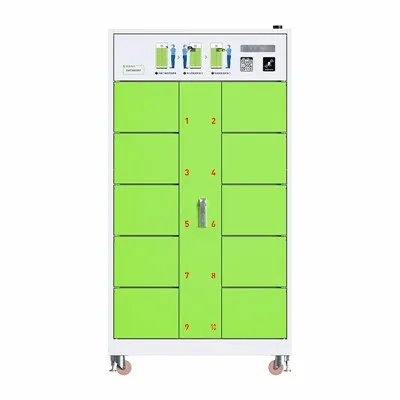
Smart Fast Charging Cabinet Reference: 1. Linden’s Handbook of Batteries, 5th Edition; 2. Battery University: Nickel-Cadmium vs. Lithium-Ion; 3. U.S. Environmental Protection Agency (EPA): Battery Disposal and Recycling Guidelines.
Jiangsu Changyun Drive Techniques Co., Ltd.
As one of the leading lithium ion battery manufacturers and suppliers in China, we offer a wide range of products with superior quality. Please rest assured to wholesale advanced lithium ion battery from our factory. If you have any enquiry about cooperation, please feel free to email us.
Address: Building B, 1st Floor, Chuangyan Port, Science and Education City, Wujin District, Changzhou City, Jiangsu Province
E-mail: eva@czbenma.com
WebSite: https://www.cyevenergy.com/
