Hey there! I’m working with a deep drawn parts supply business, and today I wanna talk about the pretty cool applications of deep drawn parts in the marine industry. In my experience, the marine world is a complex, high – stakes arena where the functionality and reliability of components are crucial, and deep drawn parts play a huge role in keeping things running smoothly. Deep Drawn Parts
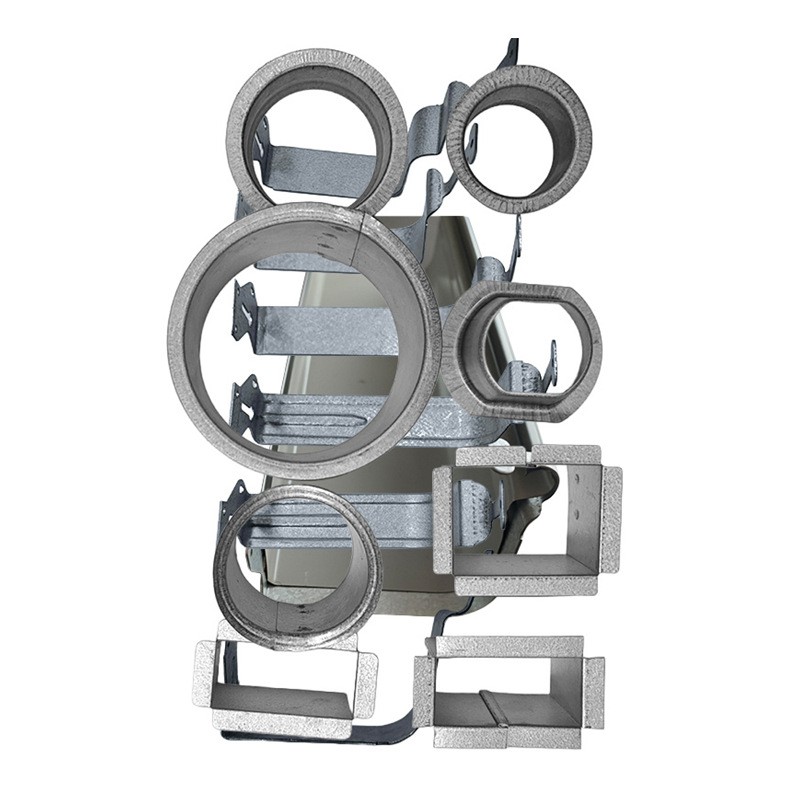
First off, let’s start with the basics. Deep drawing is a manufacturing process where a flat sheet metal is stretched into a three – dimensional shape using a die and punch. This process can create parts with excellent strength – to – weight ratios, making them ideal for the marine industry, which always looks for ways to reduce weight without sacrificing durability.
One major application of deep drawn parts in the marine industry is in shipbuilding. Ships are massive structures, and every single component matters. Deep drawn parts are used in various ship systems, like the fuel and water storage systems. For example, fuel tanks made through deep drawing are common. These tanks need to be able to withstand the harsh marine environment, including saltwater corrosion and the constant movement of the ship. The deep drawing process allows for the creation of seamless tanks, reducing the risk of leaks. Seams are often weak points where corrosion can start and fluids can escape, but a seamless deep – drawn tank eliminates these concerns.
Another area in shipbuilding is the electrical and control systems. Deep drawn enclosures are used to protect sensitive electrical components. These enclosures need to be robust enough to protect the electronics from water, dust, and mechanical damage. The deep drawing process can produce enclosures with precise dimensions, ensuring a proper fit for the electrical components inside. This is super important because a loose – fitting enclosure could allow water or dust to enter, potentially causing malfunctions or even electrical fires.
In the propulsion systems of ships, deep drawn parts also have a significant role. The engine components, such as oil pans and intake manifolds, can be made through deep drawing. The oil pan, for instance, needs to hold a large volume of oil while being lightweight and resistant to vibrations. Deep drawn oil pans can be designed to have a complex shape that maximizes the oil – holding capacity while fitting neatly into the engine compartment. The smooth surface finish of deep drawn parts also helps in reducing friction, which is beneficial for the overall efficiency of the engine.
Now, let’s move on to offshore platforms. These are like floating cities in the middle of the ocean, and deep drawn parts are essential for their proper functioning. Offshore platforms have a lot of equipment for oil and gas extraction, and many of these pieces of equipment rely on deep drawn parts. For example, the valves used in the fluid transfer systems on offshore platforms are often made through deep drawing. These valves need to be able to handle high – pressure fluids and be resistant to corrosion. The deep drawing process can create valves with a high – quality finish, which helps in ensuring a tight seal and preventing leaks.
When it comes to safety equipment on offshore platforms, deep drawn parts also come into play. Lifeboat frames, for example, can be made using deep drawing. These frames need to be strong enough to support the weight of the lifeboat and the people inside it, and at the same time, they need to be lightweight for easy deployment. Deep drawn lifeboat frames can be designed with the right shape and strength to meet these requirements.
In the area of marine navigation and communication systems, deep drawn parts have their uses too. Antenna housings are often deep drawn. These housings need to protect the antennas from the harsh marine environment while allowing the electromagnetic signals to pass through. The deep drawing process can create housings with a smooth interior surface, which helps in minimizing signal interference.
Also, the connectors and terminals used in marine communication systems can be deep drawn. These parts need to establish a reliable electrical connection, even in wet and corrosive conditions. The deep drawing process can create connectors with a precise shape, ensuring a good fit and a stable electrical connection.
Another aspect of the marine industry is the recreational boating sector. In small boats, deep drawn parts are used in a variety of ways. For example, the brackets used to attach engines, seats, and other accessories to the boat hull are often deep drawn. These brackets need to be strong enough to hold the weight of the attached components and withstand the forces exerted during boat operation. The deep drawing process can produce brackets with a high strength – to – weight ratio, which is beneficial for the overall performance of the boat.
Fuel lines and water lines in recreational boats can also be made using deep drawn parts. These lines need to be flexible enough to bend around corners in the boat’s structure while being strong enough to resist damage. Deep drawn tubing can be designed to meet these requirements, providing a reliable and long – lasting solution for fluid transfer in small boats.
In terms of why deep drawn parts are so great for the marine industry, it boils down to a few key factors. First, as I mentioned earlier, the strength – to – weight ratio is excellent. In the marine world, weight is a big deal because it affects a ship’s or boat’s speed, fuel efficiency, and stability. Using lightweight yet strong deep drawn parts helps in achieving a better balance. Second, the deep drawing process allows for the creation of complex shapes. This is important because many marine components have unique design requirements, and deep drawing can meet those needs. Third, the surface finish of deep drawn parts is usually very good. A smooth surface is less likely to accumulate dirt, debris, and rust, which is crucial in a corrosive marine environment.

Now, if you’re in the marine industry and looking for high – quality deep drawn parts, I’d love to talk to you. Whether you’re building a massive cargo ship, an offshore platform, or a small recreational boat, we’ve got the experience and the capabilities to provide you with the right deep drawn parts. Our team is dedicated to ensuring that every part we supply meets the highest standards of quality and reliability. So, don’t hesitate to reach out for a chat about your specific needs. We can work together to find the best solutions for your marine projects.
Stamped Metal Parts References
- ASM Handbook Volume 14A: Metalworking: Bulk Forming. ASM International.
- Marine Engineering: Principles, Practices and Applications. Butterworth – Heinemann.
- Ship Design and Construction. Society of Naval Architects and Marine Engineers.
Yuyao Aozhou Metal Products Co., Ltd.
We are one of the most experienced deep drawn parts manufacturers and suppliers in China. With a professional production team, we are able to meet the needs of the majority of our customers. Please rest assured to buy customized deep drawn parts made in China here from our factory.
Address: No.6, Nanbailonggang, Wuma Industrial Zone, Lubu Town, Yuyao City
E-mail: xqr-2316@163.com
WebSite: https://www.cnaozhou.com/
