If you’ve ever walked through a university campus at dawn, when the only sounds are birds and a distant lawnmower, you might have glanced at a large metal sculpture tucked between a lecture hall and a library—and wondered the same thing I did, years ago, when I first started working with campus administrators: what is the meaning of the tree campus sculpture? It’s not just a hunk of steel bolted to a concrete pad, even if it looks like one at first. Over the last decade, as a campus sculpture supplier, I’ve installed dozens of these pieces across the U.S., worked with hundreds of students and faculty, and learned that the meaning isn’t carved in metal—it’s woven into the specific needs of the campus it sits on. Campus Sculpture
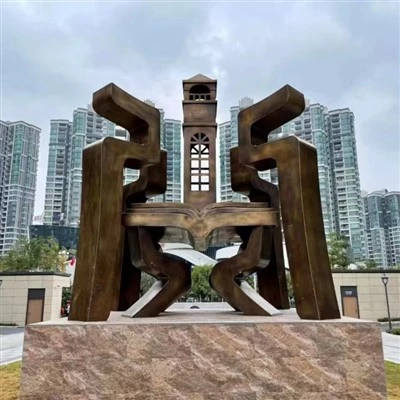
Let me start with a story, because that’s how I learned most of what matters about these sculptures. A few years back, a small liberal arts college in the Midwest reached out to me. They didn’t know what they wanted—just that their campus felt “generic,” that students barely stopped to talk in the spaces between buildings, and that their freshman orientation week had a 30% attendance rate for the last two years. They needed a sculpture that would change that. We threw around ideas: a big abstract shape, a bench with an interesting design, a small tree that would grow into a shade structure. Then one of the campus facilities managers mentioned that the college was founded in 1887, and their original campus map showed a grove of oak trees that had been cut down to build the main quad in 1952. That’s when we designed a tree sculpture, but not the kind you’d expect. It was made of reclaimed steel from the old gym’s structural beams, twisted into the shape of a gnarled oak, with 12 hollow “branches” that doubled as seating. We included a small plaque with the names of the founding faculty, and a line that read: “This tree stands where we stood, and where we will stand again.”
Within a month of installation, students were gathering under it. Freshmen sat on its branches during orientation, groups of seniors held study sessions there, and the college’s annual alumni picnic moved from the library lawn to the sculpture site. That’s not a random effect. The tree shape is universal—everyone recognizes a tree, from a 5-year-old planting their first seed to a retiree who climbed trees as a kid. It’s not intimidating like a sharp abstract sculpture, and it’s not passive like a planter with a single shrub. It’s a structure that invites interaction, which is exactly what campuses need: spaces that aren’t just for moving from class to class, but for connecting.
But meaning varies a lot, depending on the campus’s unique story. A large state university in Texas, for example, had a huge population of first-generation college students, many of whom worked part-time jobs to pay tuition. They wanted a tree sculpture that didn’t just reference the past, but spoke to the future of their students. We worked with their student government to design a sculpture that had 50 small “leaves,” each engraved with a goal or a dream a student had written during a campus workshop. The steel trunk was wrapped in quotes from alumni who had gone on to become teachers, nurses, and small business owners. For that campus, the tree’s meaning was about belonging—proving that a student’s dream, no matter how small, could take root and grow. We didn’t just install a sculpture; we helped them capture a moment in their student body’s identity.
I’ve also worked with campuses where the tree sculpture is a memorial. There’s a community college on the East Coast that lost three students in a car crash in 2019, all of whom were biology majors who loved hiking and planting native trees. Their families wanted a way to honor them, and the campus wanted a piece that would help grieving students feel less alone. We designed a tree sculpture with three thick branches, each with a small sign of a different native plant—oak, pine, dogwood—since that’s what the students had planted in the campus garden. The base has a small, always-full bird feeder, and every spring, the biology club plants a new native shrub at the sculpture’s feet. The meaning here is about continuity: the students’ love of nature lives on, and the tree is a place where other students can stop, sit, and feel connected to something larger than themselves.
Some people ask me if these meanings are intentional, or if they just happen. It’s a fair question. A lot of campus sculpture clients come to me not with a specific story, but with a vague request: “We need something that feels like our campus.” That’s where the work gets interesting. I don’t just show them a catalog of tree sculptures—we sit down, talk to students, walk the campus, listen. Last year, a technical college in the Pacific Northwest reached out. Their campus was focused on trades: welding, carpentry, electrical work. They didn’t have a big tree grove on campus, but a lot of their students talked about their grandfathers’ apple orchards, or the fir trees they’d grown up around in rural towns. We designed a tree sculpture made of reclaimed welding rods, the same kind the students use in classes, with leaves cut from scrap steel that the carpentry shop donated. The plaque didn’t have a big quote—it just read: “Grows from the same hands that build.” That’s a meaning that only makes sense for their campus, and students see themselves in it every time they walk past.
I’ve seen too many people reduce campus tree sculptures to “just decor,” but that misses the point of what a campus is supposed to be. A college or university isn’t just a place to take classes—it’s a community, a space where ideas grow, where people come together, where past and future collide. A tree sculpture isn’t there to look pretty. It’s there to mark a space, to give people a reason to pause, to leave a piece of the campus’s identity for generations of students who haven’t even enrolled yet.
There’s a science to this, too. Urban planners and psychologists have studied how public sculpture affects community spaces. A 2021 study from the University of Pennsylvania’s Graduate School of Design found that sculptures that are recognizable (like tree shapes, rather than abstract blobs) increase pedestrian traffic in campus spaces by 22%, because they act as natural landmarks. Students and faculty are 30% more likely to stop and interact with a recognizable sculpture, compared to an abstract one, according to that same study. That interaction is key: campus spaces work when people aren’t just passing through, when they’re sitting together, talking, sharing ideas. A tree sculpture is designed to encourage that. It’s not a wall that separates people; it’s a gathering point.
I’ve also learned that the best tree campus sculptures are adaptable. A campus might install one for a specific reason—say, to replace a dying oak tree that had been a gathering spot—and over time, it takes on new meanings. The Midwestern liberal arts college I mentioned earlier? A few years after we installed the sculpture, a group of students started leaving small art projects at its base, and the college added a small book exchange shelf under one of the branches. Now the tree is as much a hub for student creativity as it is a memorial to the campus’s past. The meaning doesn’t stay fixed; it grows, like a real tree, with each new class that comes through.
That’s why I do this work. I’m not just a supplier who sells metal and labor. I’m someone who gets to help campuses tell their stories. A tree sculpture isn’t a one-size-fits-all product. It’s a collaboration: between the campus, the students, the families, and me. When someone asks me, “What is the meaning of the tree campus sculpture?” I don’t have a single answer. The meaning is whatever the campus needs it to be. It’s belonging, or memory, or connection, or hope. It’s the space where a student sits before a big exam, where friends meet after class, where alumni come back to visit 20 years later and remember why they chose that school.

If you’re a campus administrator, a facilities director, or a student organization leader looking to add a piece that will become a part of your campus’s story, let’s talk. I’ve worked with small liberal arts colleges and large state universities, with budgets big and small, and I can help you design a tree sculpture that fits your campus, not a catalog. It’s more than a piece of art—it’s a place that grows with your community.
Bronze Statue In Gift Shop References
- University of Pennsylvania Graduate School of Design. (2021). Public Art as Community Infrastructure: Impacts on Campus Social Space.
- National Association of College and University Business Officers. (2020). Campus Placemaking: Trends in Public Art for Higher Education.
- American Institute of Steel Construction. (2019). Reclaimed Steel in Public Art: Case Studies of Campus Sculptures.
Huizhou Hexin Intelligent Manufacturing Industrial Co., Ltd.
Huizhou Hexin Intelligent Manufacturing Industrial Co., Ltd. is one of the most professional campus sculpture manufacturers and suppliers in China. Please feel free to buy the newest campus sculpture made in China here and get pricelist from our factory. All customized products are with high quality and competitive price.
Address: No.31, Second Industrial Zone, Nankeng Village, Xinxu Town, Huiyang District, Huizhou City, Guangdong Province, P.R.China
E-mail: zhangran@bronzehexin.com
WebSite: https://www.bronzehexin.com/
