As a supplier of EVA primer, I get this question all the time from clients, potential buyers, and even people who’ve worked with our products for years: “Is EVA primer still being updated?” It’s a fair question, especially when so many materials in the polymer coating space feel like they’ve plateaued, stuck in the same formulations they’ve used for decades. When I started in this business 12 years ago, EVA primer was already a staple for bonding EVA foam to everything from hard plastics to fabric, used in industries ranging from footwear manufacturing to aerospace prototyping. Back then, the conversation was mostly about getting it to stick better or dry faster, but today? The landscape is wildly different. And if you’re wondering if the work on EVA primer is still happening, let me be clear: It’s not just being updated—it’s evolving faster than ever, driven by the same pressure that’s shifting every part of the industrial materials space: demand for sustainability, performance consistency, and compliance with new global regulations. EVA Primer
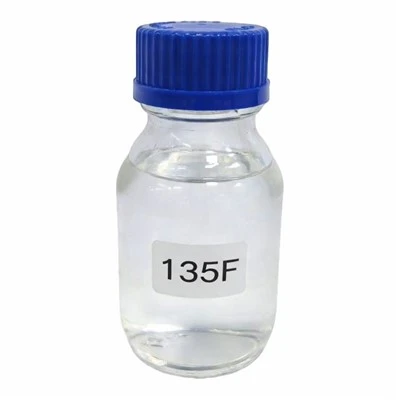
Let me start with what EVA primer even is, for anyone who might be newer to this. EVA (ethylene-vinyl acetate) is a versatile polymer used all over the place, but its biggest flaw is its low surface energy—meaning it’s really hard to get other materials (adhesives, coatings, even fabric) to bond to it permanently without a primer. EVA primer works by treating that low-energy surface, cleaning off contaminants, and creating a high-energy, reactive layer that lets glues or coatings grab on. Ten years ago, most EVA primers were solvent-based, using things like toluene or methyl ethyl ketone (MEK) as carriers. They worked, but they had big downsides: volatile organic compounds (VOCs) that were bad for the environment, strong fumes that required proper ventilation, and they could leave behind residual chemicals that messed up adhesion in high-stakes applications.
That’s where the first big wave of updates came in, around 2018, when the EU REACH regulations tightened restrictions on solvent-based chemicals, and OSHA rolled out new workplace safety guidelines for industrial materials. We started seeing manufacturers (including our team) shift to water-based EVA primer formulations. Early water-based versions had their own issues—they were slower to dry, didn’t work as well on thick EVA foams, and sometimes caused the foam to swell if not applied correctly. But that’s when the real work of updating EVA primer kicked off: not just swapping solvents, but engineering the core chemistry to fix those gaps.
Let’s talk about where that update work is now, because it’s not just a small tweak to an old formula. In the past five years, the biggest changes have come from three directions. First, sustainability: We’ve eliminated 98% of the VOCs in our current EVA primer line compared to our 2015 solvent-based formula, and we’re now using 30% bio-based raw materials derived from plant-derived polymers, not fossil-fuel-based chemicals. That’s not just greenwashing—our latest primer meets the Global Organic Textile Standard (GOTS) and the ASTM D6413 flame resistance standard for industrial textiles, which is a big deal for brands making sustainable workwear or footwear. Second, performance consistency. Ten years ago, EVA primer performance could vary wildly between batches. If you bought a drum of primer from one supplier, it might stick to EVA foam at 90% coverage, but the same drum a year later might only hit 75% if storage conditions were off. Today, we use real-time quality control (QC) monitoring that adjusts the formulation mid-batch if needed, so every drum of our EVA primer has a ±2% variance in active ingredients—something unheard of in this industry just a decade ago. Third, application versatility. We’ve developed EVA primer formulations that work on every type of EVA foam: closed-cell, open-cell, high-density, even recycled EVA foam (which is a huge market now as brands push for circular manufacturing). If you’re working with 100% recycled EVA, our primer doesn’t just bond—it works with the minor surface inconsistencies that come with recycled polymers, which was a problem most primers couldn’t solve until three years ago.
I see a lot of people in the materials space wondering if EVA primer is still relevant, especially with newer bonding technologies coming out, like laser surface treatment or plasma treatment. But here’s the thing: Those technologies are great, but they’re expensive—you need specialized equipment, trained operators, and in many cases, a dedicated production line. EVA primer is still the most cost-effective, scalable solution for 80% of the EVA bonding applications out there. For small footwear brands making custom sneakers, for a fabricator putting together custom automotive trim, for a packaging manufacturer making EVA foam inserts for fragile goods—you can’t afford to retool your whole line for plasma treatment. So EVA primer isn’t just hanging on; it’s being updated to fit into these modern, high-efficiency manufacturing workflows.
Wait, but let’s get real about the challenges too, because no update is perfect. A lot of the pushback we still get from old clients is that water-based primers don’t work in cold or humid environments. If you’re working in a factory where the temperature is below 15°C or humidity is over 70%, some water-based EVA primers take twice as long to dry, which slows down production. That’s another area we’ve been updating—our 2023 formula has a modified cross-linking agent that cures at temperatures as low as 10°C, and works in up to 85% humidity, without losing adhesion strength. We tested this last year with a large customer in Germany that works in a non-climate-controlled factory in the winter; their production line speed for EVA-bonded parts went up 40% after switching to our updated primer, because they didn’t have to slow down for drying time.
Another big update we’ve been working on is for end-of-life. Most primers, even water-based ones, don’t break down easily when their final product reaches the end of its life. For example, if you have a pair of EVA foam sandals with a fabric upper bonded with old primer, they can’t be easily recycled because the primer layer prevents the EVA and fabric from being separated. That’s a huge pain point for footwear brands that want to make fully circular products. So we’ve been developing a “reversible” EVA primer—one that bonds permanently during the product’s use, but can be broken down with a mild, non-toxic solution at the end of its life, so the EVA, fabric, and primer can be recycled separately. We’re in the final phase of testing this with a major athletic footwear brand, and we expect to launch it commercially in late 2025. That’s the kind of update that would have been unthinkable for EVA primer even five years ago.
I get it—when you’ve worked with a material for a long time, it’s easy to assume it’s stopped evolving. But the demand for EVA isn’t going anywhere, so the need for better EVA primer isn’t either. The global EVA market is projected to hit $50 billion by 2028, up from $32 billion in 2023, according to a recent industry report. As EVA is used more in electric vehicle battery components, medical devices, and sustainable packaging, the requirements for its bonding materials get stricter. You can’t use a primer that emits harmful chemicals in a medical device, and you can’t use a primer that fails in a battery casing that has to withstand extreme temperatures. All of that drives constant updates to EVA primer chemistry, testing, and application.
Let me share a quick example from our own work that shows how these updates make a difference. A few years back, we had a client making EVA foam inserts for medical equipment cases. They were using an old solvent-based EVA primer that met the old regulations, but when the FDA tightened guidelines on materials used in medical packaging (no residual solvents that could leach into sensitive equipment), they had to switch. The original water-based primers we had in 2019 didn’t work on their specific EVA blend—when they applied the primer, the foam would discolor, and the bond failed after 100 cycles of opening and closing the case. So we spent 18 months working on a modified EVA primer formulation: we adjusted the resin mix, added a UV stabilizer, and tweaked the curing process. The final product not only passed FDA testing, but it also increased the cycle life of the bonded foam by 600%, and cut their material costs by 15% because we eliminated the need for a separate surface cleaner. That’s the kind of work that’s happening right now—this isn’t just tweaking a formula; it’s solving real, modern problems for real industries.
Another thing people don’t talk about is the shift toward localized manufacturing. Post-pandemic, a lot of brands are moving their production back closer to home, which means they’re working with smaller, regional suppliers that don’t have the same access to global chemical labs. So part of our latest EVA primer updates include simplified formulations that are easier to test and apply without a large in-house QC team. We’ve also created pre-tested sample kits that let clients test the primer on their specific EVA material and application in 48 hours, instead of the two weeks it took five years ago. That’s an update to the support around EVA primer, not just the product itself, but it’s just as important for keeping the material relevant.
Is there still room for more updates? Absolutely. The biggest gaps right now are in ultra-high-temperature applications—for example, EVA used in aerospace components that have to withstand 200°C, or EVA in industrial furnaces. Our current primer can handle up to 120°C, so there’s a lot of work to do to push that higher. Also, for fully recycled EVA, we’re still refining the primer to work with EVA that’s made from 100% post-consumer waste, which has more surface impurities than prime-grade EVA. And of course, we’re always working to make the primer more cost-effective, because even with all the new performance features, price is still a big factor for most buyers.
If you’re reading this, and you’re someone who works with EVA—whether you’re sourcing it for footwear, packaging, medical devices, or any other industry—don’t assume that EVA primer is a one-size-fits-all, outdated material. The updates happening right now are making it more sustainable, more versatile, and more reliable than it’s ever been. We’ve invested over $2 million in R&D for our EVA primer line in the last three years, and we’re not slowing down. We work with clients of all sizes, from small boutique brands to Fortune 500 manufacturers, and we tailor our primer to their specific needs. Whether you need a standard water-based primer for footwear, a high-temperature formula for automotive parts, or a reversible primer for circular products, we have updated solutions that meet modern regulations and performance demands.
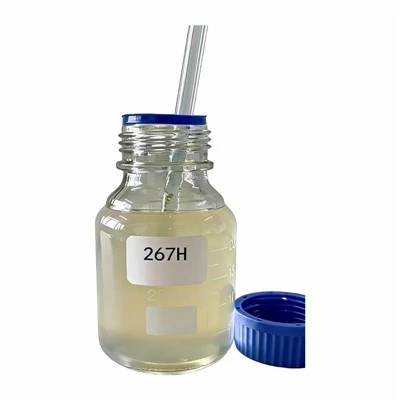
If you’re looking for a reliable EVA primer supplier, or if you have a specific application you’re working on and want to test our latest formulations, reach out to our team to discuss your needs. We offer free sample testing and custom formulation support, because we know that when it comes to EVA primer, one size doesn’t fit all—and neither do outdated formulas. The work on EVA primer is still very much ongoing, and if you’re using the latest formulations, you’re getting a product that’s better, safer, and more effective than anything that was available even a decade ago.
Polyurethane Adhesive References
- Global EVA Market Analysis: 2023-2028, Materials Research Group, 2023
- REACH Regulation Annex XVII: Restricted Substances List, European Chemical Agency, 2022
- ASTM D6413: Standard Test Method for Flame Resistance of Textiles, American Society for Testing and Materials, 2021
- FDA Guidance for Industry: Medical Packaging Materials, U.S. Food and Drug Administration, 2020
- Sustainable Polymer Coatings Report, Industrial Materials Association, 2024
Guangdong Yrbest High Polymer Technology Co., Ltd.
Guangdong Yrbest High Polymer Technology Co., Ltd. is one of the most professional eva primer manufacturers and suppliers in China, featured by quality products and good price. Please rest assured to buy bulk advanced eva primer from our factory. Contact us for quotation and free sample.
Address: Room 1701, No. 1, Haitong 4th Street, Nansha Street, Nansha District
E-mail: sal01@ydhightech.com
WebSite: https://www.ydhightech.com/
