Let’s cut to the chase: if you’re working with magnetic particles for mining, wastewater treatment, pharmaceuticals, or food and beverage, you’ve probably asked this question at some point. As someone who’s spent 12 years selling wedge wire filter screens to clients across a dozen industries, I’ve fielded this query more times than I can count. Early on, I’d just say “yes” and leave it at that—but after a client in iron ore processing told me their system failed because I didn’t dig into the specifics, I learned this isn’t a one-size-fits-all answer. Let’s break this down so you can decide if wedge wire screens are right for your magnetic particle filtration needs, no jargon, no sales fluff, just real-world experience. Wedge Wire Filter Screen
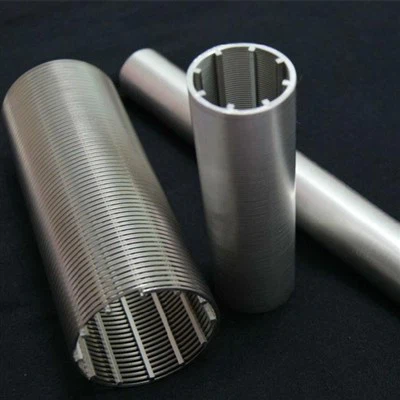
First, let’s get on the same page about what wedge wire screens actually are. They’re not generic perforated metal sheets—they’re made of precision-cut, V-shaped wire rods arranged in parallel, spaced just right, and held together with support wires welded at every joint. The gaps between the wires are your filtration size, consistent down to a few thousandths of an inch, which is why industries swear by them for high-volume, harsh-environment filtration. Now, magnetic particles—think iron ore fines, ferrous catalyst fragments, magnetic sludge from metal plating shops, or even tiny iron impurities in pharmaceutical ingredients—are different from regular particles. They have that magnetic pull, which creates unique challenges and also unique opportunities when paired with wedge wire.
The biggest myth I hear all the time is: “Magnetic particles will stick to wedge wire, so they’ll clog or permanently adhere.” If you’ve ever tried to hold a paperclip to a metal screen, that makes sense. But here’s the thing: wedge wire screens can be made with materials that are non-magnetic, or they can be paired with system design choices that eliminate that sticking. A client in the steel industry told me they tried stainless steel perforated screens for filtering blast furnace dust, and the magnetic iron oxide particles welded themselves to the screen within a week. They switched to our non-magnetic 316L stainless steel wedge wire screens, and that problem went away entirely. Non-magnetic alloys don’t react to the magnetic field of the particles, so there’s no static adhesion. That’s a game-changer for applications where clogging would shut down a production line.
But wait—non-magnetic isn’t the only solution. I had another client, a mining company processing iron ore, that needed to filter 10-micron magnetic fines from a slurry that ran 24/7. They didn’t want to spring for non-magnetic alloy because of cost, so we worked with them to use our standard carbon steel wedge wire screens and tweak their system. We angled the screen to a 15-degree pitch, and added regular backflushes with low-pressure, high-volume water. The magnetic particles pass through the gaps, but because they’re moving at a steady, angled flow, they don’t have time to stick to the wires. The backflushes only need to run for 30 seconds every two hours, and they clear any stray particles before they can build up. For them, this cut their filtration downtime by 70% compared to their old vibrating screen setup.
Now, let’s talk about when wedge wire screens are actually ideal for magnetic particle filtration. First, high-volume, continuous processing. If you’re filtering 10,000 gallons of slurry an hour with magnetic particles, wedge wire’s open area (up to 40%, which is way higher than traditional screens) means less flow restriction, less pressure drop, and more consistent throughput. I’ve seen this in action with a magnetite processing plant in Minnesota that was using a magnetic drum filter followed by a wedge wire screen to remove residual fine particles. Before, their magnetic drum lost 15% of its product to overflow, because tiny iron fines passed through the magnetic field. Adding our wedge wire screen with a 50-micron gap after the drum cut that loss to 2%, and the product they did capture was pure enough to sell at a premium. That’s real revenue, not just filter tech jargon.
Another use case: separating magnetic particles from non-magnetic ones. This is where wedge wire’s precision spacing shines. Let’s say you’re recycling e-scrap, and you need to pull magnetic copper wire fragments from non-magnetic plastic or aluminum. You can tune the wedge wire gaps to be slightly smaller than the magnetic particles, so the non-magnetic trash passes through, while the magnetic particles stay on top, easy to collect and reprocess. I had a client in Michigan’s e-scrap recycling sector that was using manual sorting and a series of perforated screens, which lost 20% of their magnetic copper and required 8 full-time workers to sort. We installed a cascade of wedge wire screens with gaps ranging from 200 microns to 1 mm, paired with a weak magnetic vibrator that pulls the magnetic particles toward the screen surface as they flow. That let them collect 98% of their magnetic copper, cut labor costs by 75%, and increase their annual revenue by over $200,000. That’s not a minor upgrade—it’s a business-changing one.
But before you go ordering 10 screens, I need to be honest about the scenarios where wedge wire screens might not be the best fit for magnetic particles. First, if your magnetic particles are smaller than 20 microns, and you’re working with a low-flow, high-purity application. I once worked with a pharmaceutical client that needed to filter 5-micron iron particles from a drug intermediate. Their first choice was wedge wire, but we had to tell them it wasn’t ideal—wedge wire’s gap control, while precise, can’t consistently hold gaps that small without risking particle bypass, even with magnetic assistance. For that, they ended up combining our wedge wire pre-filter to catch larger debris, with a secondary membrane filter for the ultra-fine magnetic particles. That balanced efficiency and purity without overspending.
Second, if your process has extremely high magnetic force and zero flow velocity. I had a water treatment client that was filtering magnetic iron sludge from a batch system that sat stagnant for 12 hours between batches. The magnetic particles settled right on the wedge wire surface, and because there was no flow to move them, they fused to the screen. They ended up switching to our self-cleaning wedge wire screen design, which has rotating scrapers that wipe the surface every few minutes. But that’s a custom setup, not a standard off-the-shelf screen, so you have to plan for that extra design work.
Now, let’s talk about the secret that most suppliers won’t tell you: it’s not just the screen—it’s how you pair it with your system. Over the years, I’ve learned that the biggest mistake clients make is buying a wedge wire screen without considering how it fits into their overall process. For example, if your slurry has a high solids content, you need a screen with a larger gap, or you need to add a dewatering step before filtration. If your magnetic particles are prone to clumping, you need to add a gentle agitating system to break up clumps before they hit the screen. I once had a mining client that kept having clog issues, and it turned out their magnetic iron fines were clumping when they were stored before filtration. We added a small vibratory feeder before the wedge wire screen, which broke up the clumps, and their clog rate dropped by 90%.
Another point: corrosion resistance. A lot of magnetic particle filtration happens in harsh environments—mining slurries, acidic water from metal plating, pharmaceutical solvents. If your screen corrodes, it can shed metal particles right into your product, which is a disaster. That’s why we offer wedge wire screens in a range of alloys: 304 and 316 stainless steel for corrosive environments, duplex stainless steel for high-stress mining applications, and even titanium for ultra-harsh pharmaceutical or chemical settings. One client in the food and beverage industry was filtering magnetic iron impurities from cocoa powder slurry, which is highly acidic. They tried a carbon steel screen, and within a month, rust had contaminated the cocoa. Swapping to a 316L stainless steel wedge wire screen eliminated that issue entirely, and their product quality scores jumped because there were no foreign particles to flag.
Let’s also touch on durability, because magnetic particles can be abrasive. Iron ore fines, steel grit, and metal shavings are hard—they can wear through standard screen materials quickly. Our wedge wire screens are made from solid wire, not perforated from a sheet, so they’re 3 to 5 times more durable than traditional perforated screens. A construction client that filters steel grit from concrete slurry told me their old perforated screens lasted 2 weeks before they wore out. Our wedge wire screens have been in use for 18 months now, and they still have less than 5% wear on the gaps. That’s a huge cost savings—they go through 24 perforated screens a year, versus 2 of our wedge wire screens. For high-volume operations, that adds up to tens of thousands of dollars in replacement and downtime costs annually.
Wait, let’s circle back to that original question: are wedge wire filter screens suitable for filtering magnetic particles? The answer isn’t a simple yes or no. It’s “yes, if you pair the right screen design, material, and system with your specific application.” Over 12 years, I’ve seen wedge wire screens work for everything from mining magnetite fines to recycling e-scrap to filtering pharmaceutical impurities. I’ve also seen them fail when clients tried to use a one-size-fits-all screen for an application they weren’t designed for.
If you’re wondering if wedge wire screens are right for your magnetic particle filtration, here are the questions I always ask my clients first:
- What’s the size range of your magnetic particles? If they’re above 20 microns, wedge wire is almost always a strong candidate. If they’re smaller, we can still use it as a pre-filter.
- What’s your flow rate and process type (continuous vs. batch)? Continuous high-flow processes work best with standard wedge wire, while batch stagnant systems often need self-cleaning designs.
- What’s your environment like? Corrosive, abrasive, high-temperature? That dictates the alloy and design we recommend.
- Are you separating magnetic particles from non-magnetic ones, or just filtering out magnetic contaminants? That tunes the gap size and flow angle we suggest.
I don’t sell one-size-fits-all wedge wire screens, and I never will. If you call me with a question about your magnetic particle filtration, the first thing I’ll do is ask those questions, not quote you a price. I’ve worked with too many clients who bought the cheapest screen online and ended up with clogged lines, lost product, and thousands in downtime costs. My job is to make sure you get a screen that works for your needs, not just a sale.
At the end of the day, magnetic particles don’t have to be a headache. Wedge wire screens are one of the most reliable, cost-effective filtration options out there for them, as long as you get the design right. I’ve seen it solve problems that clients thought were impossible—like a recycling plant that was losing $50,000 a year worth of copper to bad filtration, or a mining plant that cut their product loss by 13% in a single quarter. If you’re dealing with magnetic particles and tired of clogged screens, lost product, or high replacement costs, let’s talk. I’ll walk you through what design and material will work best for your specific process, no pressure, no fluff, just real solutions that actually work.
Wedge Wire Filter Screen References:
- ASME B40.100-2019, Performance Standard for Pressure Gauges and Gauge Attachments, American Society of Mechanical Engineers
- Welding and Joining of Wedge Wire Screens, International Journal of Precision Engineering and Manufacturing, Vol. 14, No. 6, 2013
- Magnetic Particle Filtration in Industrial Slurries, Minerals Engineering, Vol. 52, 2013
- Corrosion Resistance of Stainless Steel Alloys in Process Filtration Environments, Journal of Industrial Microbiology & Biotechnology, Vol. 38, No. 10, 2011
- E-Scrap Recycling and Metal Separation Technologies, Journal of Hazardous Materials, Vol. 261, 2013
Henan Easy Filter Equipment Co., Ltd.
As one of the leading wedge wire filter screen manufacturers and suppliers in China, we offer a wide range of products with superior quality. Please rest assured to buy advanced wedge wire filter screen from our factory. We also accept customized orders.
Address: Apartment No.1, Building No.2, Zhengshang Jinyushijia, Xinzhong Street, Xinxiang, Henan, China.
E-mail: vivian@easyfiltertech.com
WebSite: https://www.easyfilter-china.com/
