Hey there! As a supplier of PVC air ducts, I often get asked if PVC air ducts require any insulation. It’s a great question, and one that I’m happy to dive into. PVC Air Duct
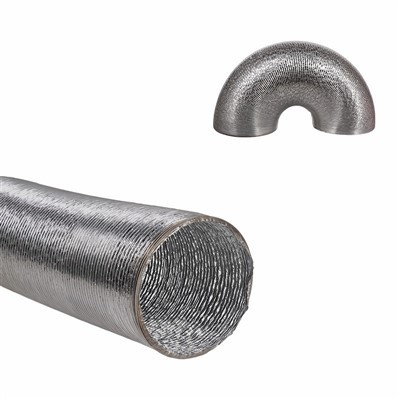
First off, let’s talk a bit about PVC air ducts. PVC, or polyvinyl chloride, is a popular material for air ducts because it’s lightweight, durable, and relatively inexpensive. It’s also resistant to corrosion and chemicals, which makes it a great choice for a variety of applications.
Now, onto the main question: do PVC air ducts need insulation? Well, the answer isn’t a simple yes or no. It really depends on a few factors, like the environment where the ducts will be installed, the temperature of the air being transported, and your specific heating and cooling needs.
One of the main reasons you might want to insulate PVC air ducts is to prevent heat transfer. If you’re moving hot or cold air through your ducts, you don’t want that air to lose its temperature before it reaches its destination. Insulation helps to keep the air inside the ducts at a consistent temperature, which can improve the efficiency of your heating and cooling system.
For example, let’s say you have a commercial building with a central HVAC system. The air ducts are responsible for distributing heated air in the winter and cooled air in the summer. Without insulation, a significant amount of that heated or cooled air can be lost through the walls of the ducts. This means your HVAC system has to work harder to maintain the desired temperature in the building, which can lead to higher energy bills.
Another reason to insulate PVC air ducts is to reduce condensation. When warm, moist air comes into contact with a cold surface, like an uninsulated PVC duct, condensation can form. This can lead to a few problems. First, the moisture can cause the ducts to rust or corrode over time, which can shorten their lifespan. Second, the condensation can drip onto the floor or other surfaces, causing water damage and potentially creating a slip hazard.
Insulation helps to prevent condensation by keeping the surface temperature of the ducts closer to the temperature of the air inside. This reduces the likelihood of warm, moist air coming into contact with a cold surface and forming condensation.
But here’s the thing: not all situations require insulation for PVC air ducts. If you’re using the ducts in a relatively temperate environment where the temperature of the air being transported doesn’t vary much, insulation might not be necessary. For instance, if you’re using the ducts to circulate air in a room that’s kept at a constant temperature, like a server room or a storage area, you might not need to insulate the ducts.
Also, if the ducts are installed in an area where they’re not exposed to extreme temperatures or moisture, insulation may not be a priority. For example, if the ducts are installed inside a well – insulated building and are protected from the elements, the need for additional insulation is reduced.
When it comes to choosing the right insulation for PVC air ducts, there are a few things to consider. There are different types of insulation materials available, such as fiberglass, foam, and reflective insulation. Each has its own pros and cons.
Fiberglass insulation is a popular choice. It’s relatively inexpensive and has good thermal insulation properties. However, it can be a bit messy to install, and if the fibers are inhaled, they can cause health problems. So, proper safety precautions need to be taken during installation.
Foam insulation, on the other hand, is easy to install and has excellent thermal and moisture – resistant properties. It can be sprayed onto the ducts or come in pre – formed sheets. But it can be more expensive than fiberglass.
Reflective insulation works by reflecting radiant heat. It’s a good option if you’re dealing with a lot of radiant heat in the environment. It’s lightweight and easy to install, but it may not be as effective at reducing conductive heat transfer as other types of insulation.
So, how do you decide if you need to insulate your PVC air ducts? Here are a few steps you can take:
- Evaluate your environment: Consider the temperature and humidity levels in the area where the ducts will be installed. If it’s a hot, humid climate or an area with large temperature fluctuations, insulation is probably a good idea.
- Assess your heating and cooling needs: Think about the temperature of the air you’ll be transporting through the ducts. If you’re moving hot or cold air over a long distance, insulation can help maintain the temperature and improve efficiency.
- Look at your budget: Insulation can add to the cost of your project. You need to weigh the benefits of insulation against the additional expense.
As a PVC air duct supplier, I’ve seen firsthand how insulation can make a big difference in the performance of a ventilation system. I’m always happy to help my customers figure out if insulation is right for their specific situation. If you’re in the process of planning a ventilation project and you’re not sure if you need to insulate your PVC air ducts, I’d love to have a chat with you.
Whether you’re a contractor working on a large commercial building or a homeowner looking to upgrade your home’s ventilation system, I can provide you with the information and products you need. I can help you choose the right type of PVC air ducts and, if necessary, the right insulation material.
If you think you might need PVC air ducts or have questions about insulation, don’t hesitate to reach out. We can have a discussion about your project, and I can give you some advice based on my experience. Let’s work together to create an efficient and effective ventilation system for your space.

References:
ASHRAE Handbook of Fundamentals
The Building Science Corporation’s reports on ventilation and insulation
Nylon Tubing So, if you’re ready to take the next step in your ventilation project, feel free to reach out. We can start a conversation about your needs and see how I can help you get the best PVC air ducts and insulation solutions.
Dongyang Hstube Co., Ltd.
As one of the leading PVC air duct manufacturers and suppliers in China, we warmly welcome you to wholesale cheap PVC air duct for sale here from our factory. If you have any enquiry about free sample, please feel free to email us. Quality products and reasonable price are available.
Address: NO.5 CHENGDONG ECOLOGICAL INDUSTRIAL ZONE, DONGYANG, ZHEJIANG, CHINA.
E-mail: sales@hstube.com
WebSite: https://www.ductword.com/
