As a proud supplier of wooden pallets, I’ve had the privilege of witnessing firsthand the versatility and value these essential tools bring to countless industries. Wooden pallets are more than just a platform for transporting goods; they are a testament to the art and science of design. In this blog post, I’ll delve into the key design features of wooden pallets that make them a staple in logistics and supply chain management. Wooden Pallets

Material Selection
The choice of wood is the foundation of any well – designed wooden pallet. At our facility, we carefully select the type of wood based on the intended use of the pallet. Hardwoods such as oak and maple are known for their strength and durability. They can withstand heavy loads and are less likely to break or warp under pressure. These are ideal for applications where the pallets will be used for frequent handling of heavy items, such as in manufacturing plants or warehouses dealing with large machinery parts.
On the other hand, softwoods like pine are more cost – effective and still offer sufficient strength for many common applications. Pine pallets are lightweight, which reduces shipping costs, and they are easy to repair or customize. They are often used in the food industry for transporting fresh produce or in the retail sector for consumer goods.
The moisture content of the wood also plays a crucial role. Wood with a high moisture content is prone to rot, mold growth, and insect infestation. We ensure that the wood we use has an appropriate moisture level, typically between 18% and 22%. This not only extends the lifespan of the pallet but also maintains its structural integrity.
Structural Design
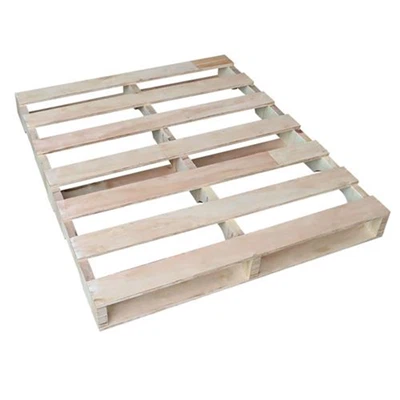
The structural design of a wooden pallet is carefully engineered to optimize strength, stability, and functionality. The most common types are the two – way and four – way entry pallets.
Two – way entry pallets have openings on two opposite sides, allowing forklifts to insert their forks from either of these two sides. This design is often used in applications where the pallet will be stored in a rack system with access from only two directions. Two – way entry pallets are simpler in construction and can be more cost – efficient for specific storage setups.
Four – way entry pallets, as the name suggests, have openings on all four sides. This provides maximum flexibility in terms of forklift access. Forklifts can approach the pallet from any direction, making loading and unloading faster and more convenient. Four – way entry pallets are ideal for dynamic warehouse environments where quick turnaround times are essential.
In addition to the entry type, the design of the stringers and deck boards also impacts the pallet’s performance. Stringers are the longitudinal supports that run beneath the deck boards. They distribute the weight of the load evenly across the pallet. The number, size, and spacing of the stringers are carefully calibrated to handle different load capacities. Deck boards are the horizontal boards on top of the pallet where the goods are placed. Thicker and wider deck boards can provide more surface area for the load, reducing the risk of items slipping or shifting during transport.
Size and Dimensions
Standard sizes are the norm in the wooden pallet industry, and for good reason. The most common size in North America is the 48"x40" pallet. This size is compatible with most storage racks, shipping containers, and handling equipment in the region. Using standard – sized pallets streamlines the logistics process, as it ensures that pallets can be easily transferred between different trucks, warehouses, and distribution centers.
Custom sizes are also available to meet specific customer requirements. For example, in some industries, such as furniture manufacturing, larger or non – standard sized pallets may be needed to accommodate oversized products. We work closely with our customers to design and produce pallets of the exact dimensions they need, ensuring a perfect fit for their goods.
The height of the pallet is another important consideration. A taller pallet may provide more clearance for the forklift forks, but it also takes up more vertical space in storage. We balance these factors to offer pallets with an appropriate height for each application, taking into account the available storage space and the type of handling equipment.
Manufacturing Standards
To ensure the quality and safety of our wooden pallets, we adhere to strict manufacturing standards. Quality control measures are in place at every stage of the production process. From the inspection of raw materials to the final assembly and finishing touches, our team of experts checks for any defects or inconsistencies.
We also comply with international standards such as ISO (International Organization for Standardization) and ISPM – 15 (International Standards for Phytosanitary Measures No. 15). ISPM – 15 is particularly important for international trade, as it regulates the treatment of wooden packaging materials to prevent the spread of pests and diseases. Our pallets are heat – treated or fumigated in accordance with ISPM – 15 requirements, ensuring that they can be shipped across borders without any issues.
Sustainability Features
In today’s environmentally conscious world, sustainability is a key concern for many of our customers. Our wooden pallets are designed with sustainability in mind. Wood is a renewable resource, and we source our wood from forests that are managed sustainably. This means that the trees are harvested in a way that ensures the long – term health and productivity of the forest.
We also promote the reuse and recycling of our pallets. Many of our customers return their used pallets to us, which we then repair and refurbish for further use. This reduces waste and the demand for new wood, making our pallets a more sustainable choice compared to other types of packaging materials.
Cost – Effectiveness
One of the most significant advantages of wooden pallets is their cost – effectiveness. Compared to other materials like plastic or metal, wood is relatively inexpensive. The manufacturing process for wooden pallets is also less complex, which further reduces the cost.
In addition, wooden pallets are easy to repair. If a deck board or a stringer is damaged, it can be quickly and inexpensively replaced, extending the lifespan of the pallet. This is in contrast to plastic or metal pallets, which may require more extensive and costly repairs or even replacement in case of damage.
Conclusion
The design features of wooden pallets are a culmination of functionality, durability, and cost – effectiveness. From the careful selection of materials to the strict adherence to manufacturing standards, every aspect of the design is optimized to meet the diverse needs of our customers. Whether you are in the food industry, manufacturing, or retail, wooden pallets offer a reliable and practical solution for your shipping and storage requirements.
Wooden Pallets If you are interested in learning more about our wooden pallets or would like to discuss a potential purchase, we would be delighted to hear from you. Our team of experts is always ready to provide you with detailed information and customized solutions to meet your specific needs. Contact us today to start a conversation about how our wooden pallets can enhance your logistics operations.
References
- American Wood Council. (202X). Wood Design & Construction.
- International Standardization Organization. (202X). Standards for Pallet Design and Manufacturing.
- International Plant Protection Convention. (202X). International Standards for Phytosanitary Measures No. 15.
Hongyiyuan Packaging Materials (Ningbo) Co., Ltd.
With abundant experience, we are one of the most professional wooden pallets manufacturers and suppliers in China. We warmly welcome you to wholesale high quality wooden pallets in stock here from our factory. If you have any enquiry about quotation, please feel free to email us.
Address: No. 2, Danshuihong Road, Cidong Industrial Zone, Cixi City, Ningbo, Zhejiang Province.
E-mail: 13812921555@126.com
WebSite: https://www.cnhongyiyuan.com/
